

Menet
Auvergne-Rhône-Alpes, Cantal
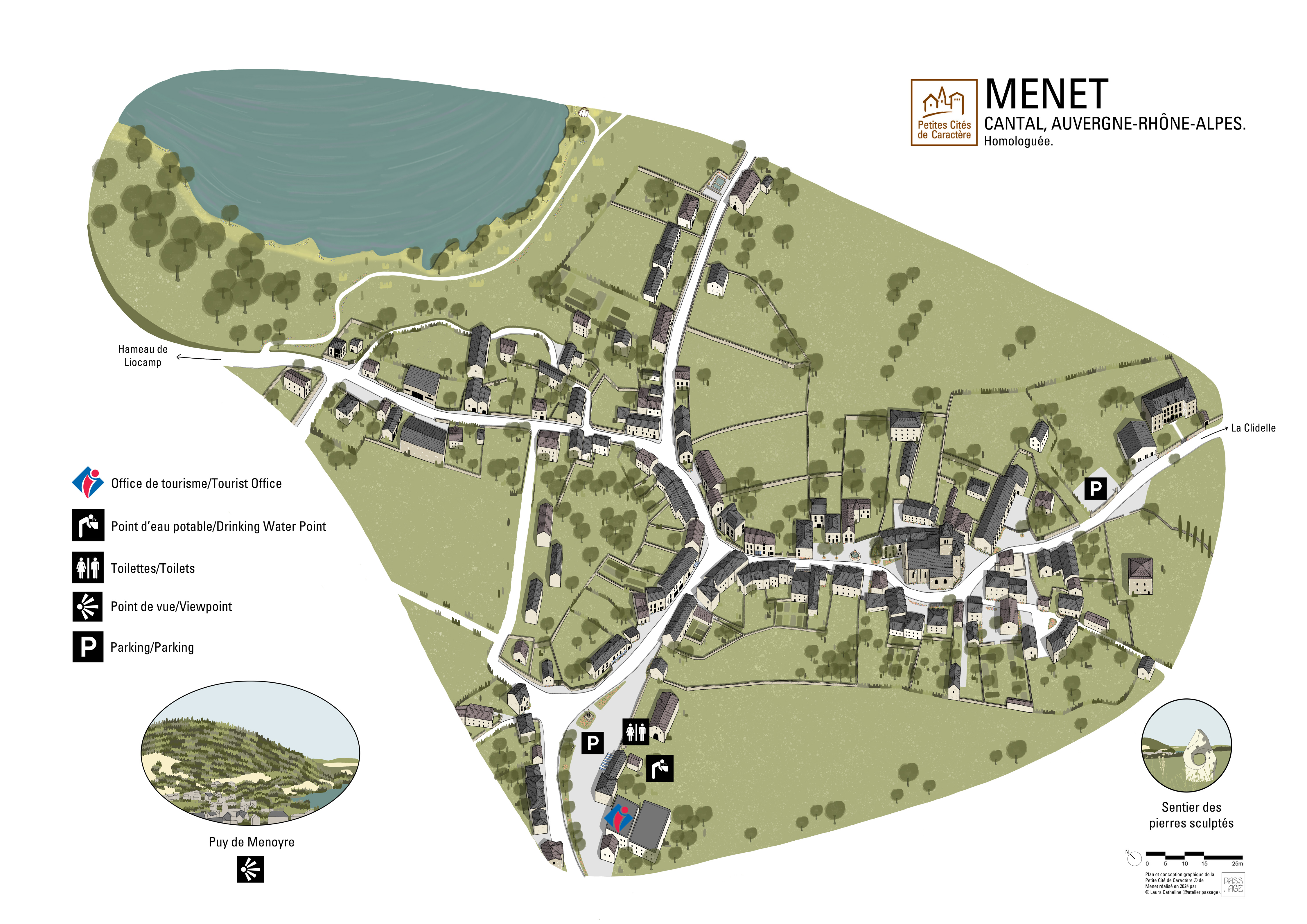
Menet, Petite Cité de Caractère®
Menet is designated Petite Cité de Caractère®. As such, it forms part of a national project aimed at promoting and protecting the architectural heritage of little towns across France. Through tourism, the initiative encourages visitors to embrace the local culture by strolling through the streets, learning about the history of the area, taking part in local events, and discovering the local way of life. In Cantal, there are several Petite Cité de Caractère® little towns to discover. The digital map will help you navigate each of them and highlight their main attractions.
Menet, Village of Stone
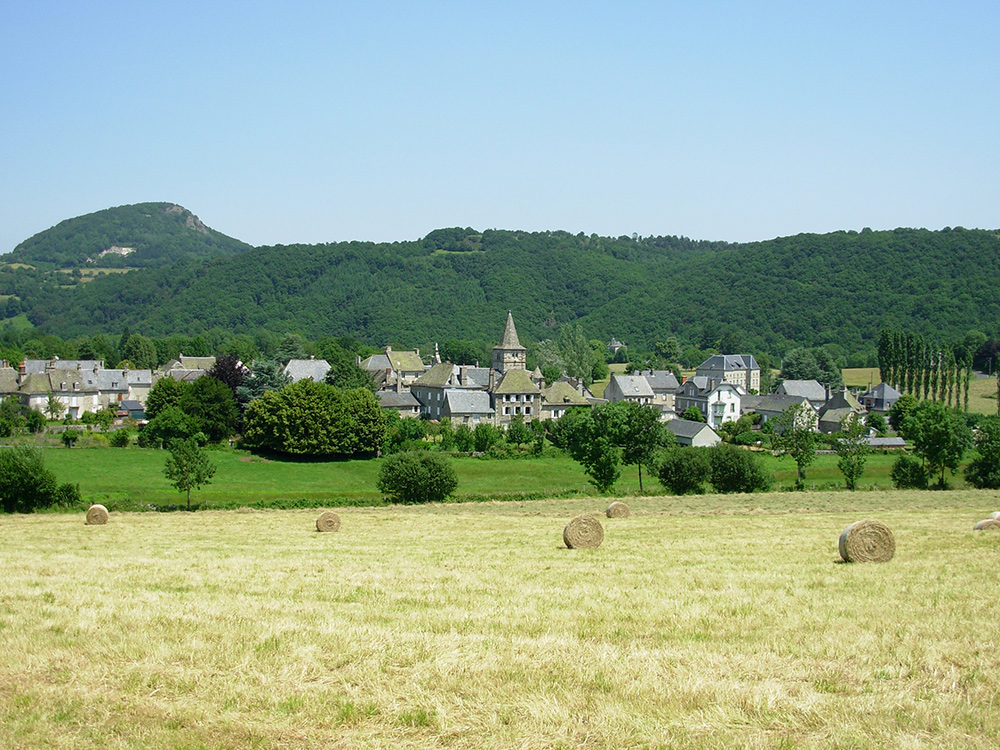
A village nestled in the foothills of the Volcanoes of Auvergne Regional Nature Park, Menet is deeply connected to its surroundings, nestled at the foot of the Puy de Menoyre and its natural lake. The local stone has shaped the village’s identity and the craftsmanship of its stonemasons, evident in the architecture of the church and the opulent houses. The expertise of the stone craftsmen lives on through the built heritage, the International Stone Carving Symposium and the Carved Stones Trail. Music also plays an important role in Menet’s culture, thanks in particular to the influence of Soulima Stravinsky. The son of the famous composer spent his summers in the village for 40 years and supported the “Nuits Musicales de Menet” festival.
Origins of the Village
Human settlement at the Menet site dates back a very long time. Three Bronze Age swords (2200–800 BC) were discovered in the late 19th century in the hamlet of Aliès. With the Puy de Menoyre, where a fortress stood in the Early Middle Ages (476 to 1000 AD) on a site occupied since the Neolithic period, and the Fô burial mound, which contained an Iron Age cremation grave (800 BC to the 1st century AD), Menet is steeped in ancient history. Around the 9th century, a community of monks began clearing the valley and settled in Menet. The Priory of Menet, with the church at its centre, built on a rock surrounded by marshes, was under the jurisdiction of the Priory of Bort and, until the 14th century, of the Diocese of Limoges, and thereafter of that of Clermont. During the French Revolution, it was attached to the Diocese of Saint-Flour.
Menet Stones
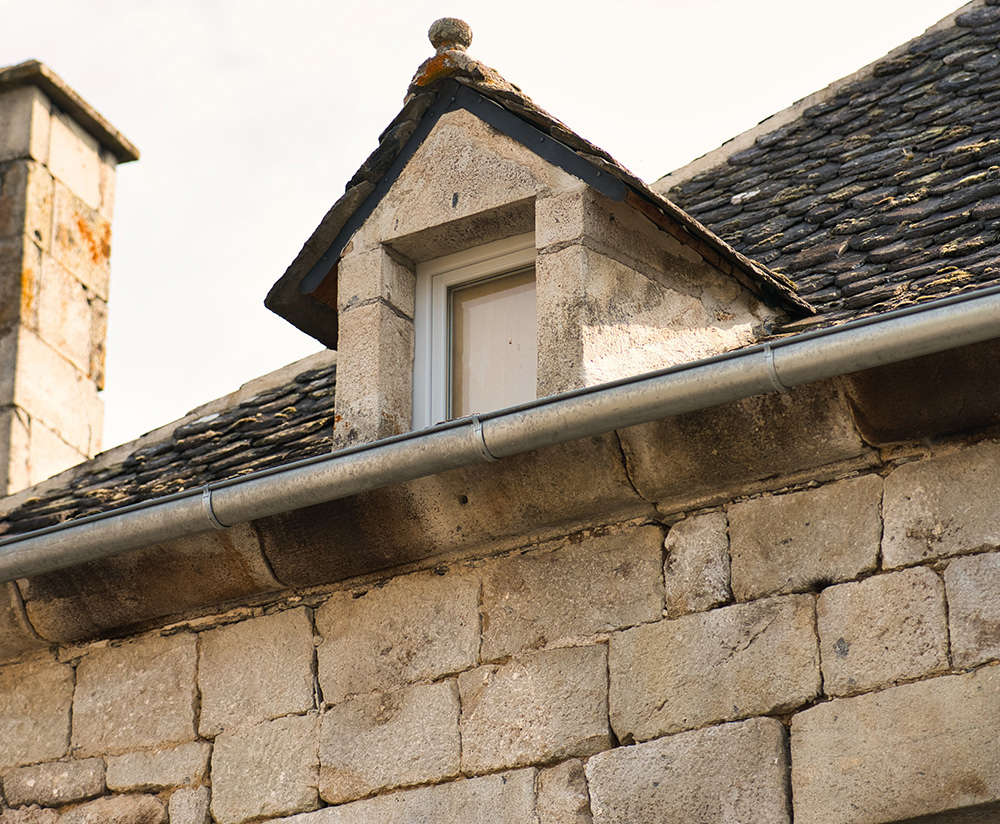
Construction, sculpture, vaulting and roofing: thanks to their diversity, Menet’s volcanic stones are naturally suited to all the architectural needs of the village. The trachyte known as “Menet stone” comes from the three neighbouring hills of Puy d’Augoules, Puy de Menoyre and Aliès. It is a light-coloured, rough, fully crystallised rock, and the lack of mineral orientation explains why it is so easy to cut. It was used as a building material in fountains, houses, farm buildings and the church’s capitals. Brocq tuff, with its ochre hue, is composed of a multitude of air pockets, giving it a certain lightness and excellent fire resistance. It can be seen on houses, bread ovens, vaults and the church’s dome. Aldy phonolite, or ‘the stone that rings’, is cut into thin slabs for use as slate roofing on the most important houses and burons (cabins where shepherds make cheese in the pastures).
Quarries and Stonemasons
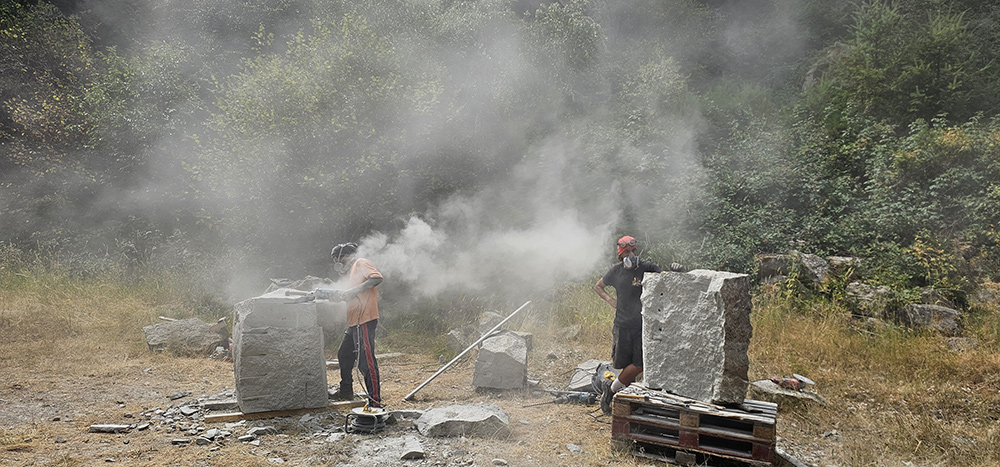
The quarries that supply the region with building materials have been renowned since ancient times. They reached the peak of their activity in the 19th century, driven by population growth, agricultural and commercial development, and the needs of railway construction. By 1930, there were as many as 250 stonemasons in Menet! Working conditions were harsh: mine explosions, harsh weather, and ever-present dust. The stone was carried down on donkeys, which then carried water back up. At the start of the 20th century, stone was paid for in kilos of bread. The quarries were operated at different times and according to need (Le Cheyrié, Augoules, Aliès, Le Liocamp, Brocq). Today, only one quarry remains in operation.
Place de la fontaine
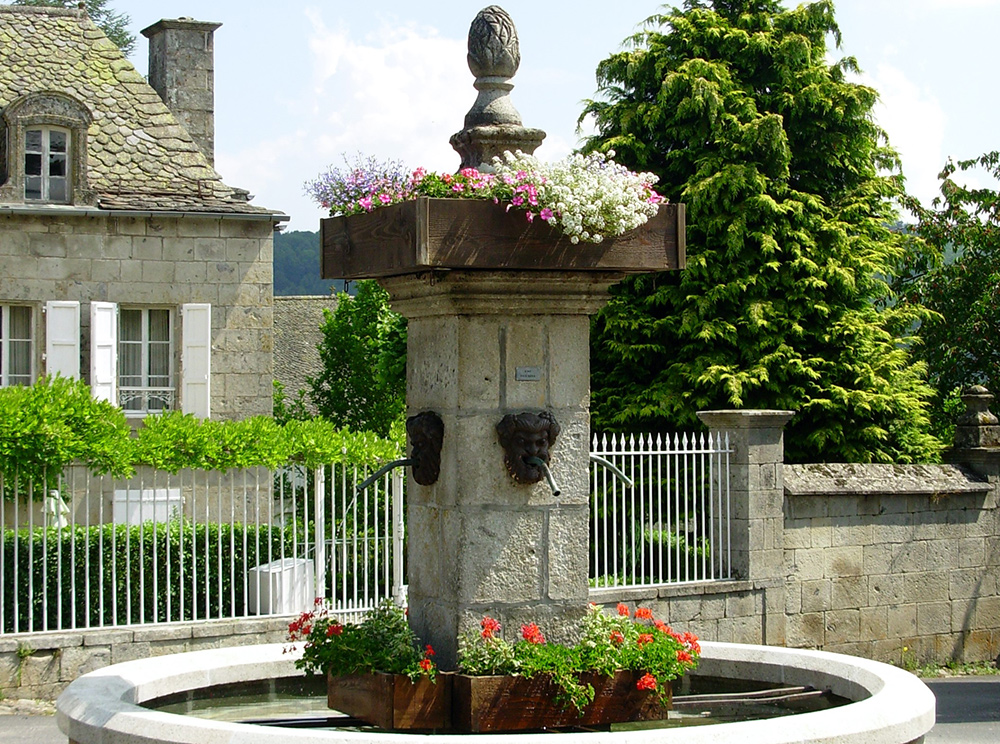
Thanks to a bequest from the Murat family, the fountain was built in 1863. It is supplied by a cistern built at the same time on the slopes of the Puy de Menoyre, which draws water from one of the village’s many springs. Two further washhouses were built in Menet, significantly improving daily life for the residents. These structures were undoubtedly influenced by the hygiene movement that swept across Europe following the major pandemics of the early 19th century, and Louis Pasteur’s discoveries regarding the role of microorganisms.
The Romanesque St Peter’s Church
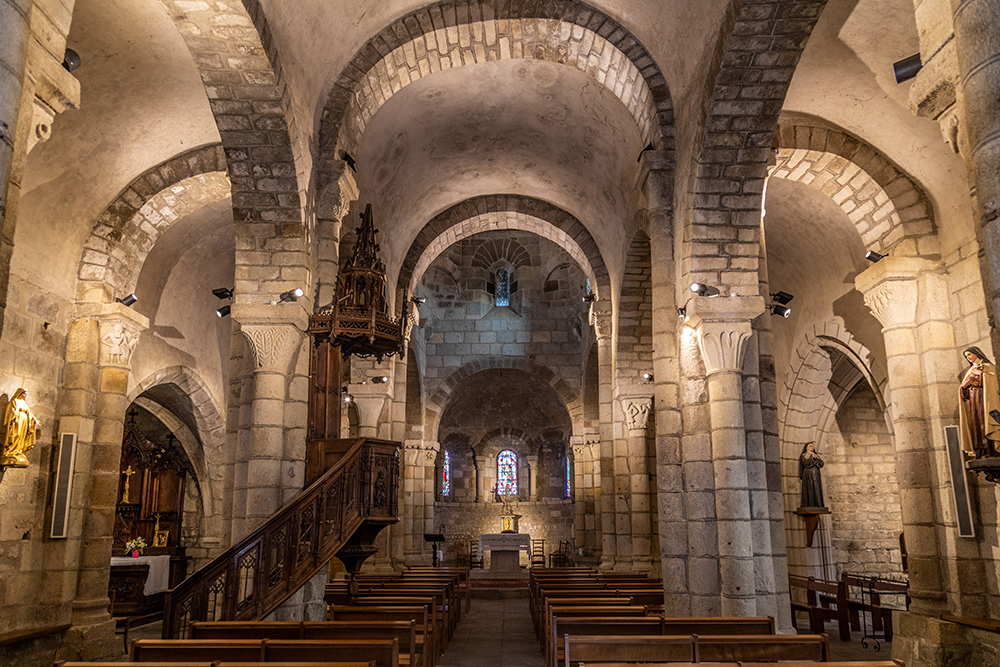
A jewel of Romanesque art, classified as a Historical Monument in 1922, the composite architecture of the St Peter’s Church bears witness to a history of constant evolution, from the Middle Ages to the 21st-century restorations. From the former 12th-century priory, the church has retained its Romanesque apse, its nave and aisles, and its lantern tower housing a dome resting on squinches that is unique in Upper Auvergne. In 1613, the original tower was topped with a belfry and a spire featuring an octagonal framework. To hoist the 1615 bell to the top of the church, a circular oculus was cut into the Romanesque dome made of Brocq tuff. The twin windows of the belfry ventilate the roof structure and are fitted with wooden louvres (sets of downward facing slats) that direct the ringing of the bells towards the ground. In the 19th century, a staircase tower was built to provide access to the belfry.
Figured Capitals
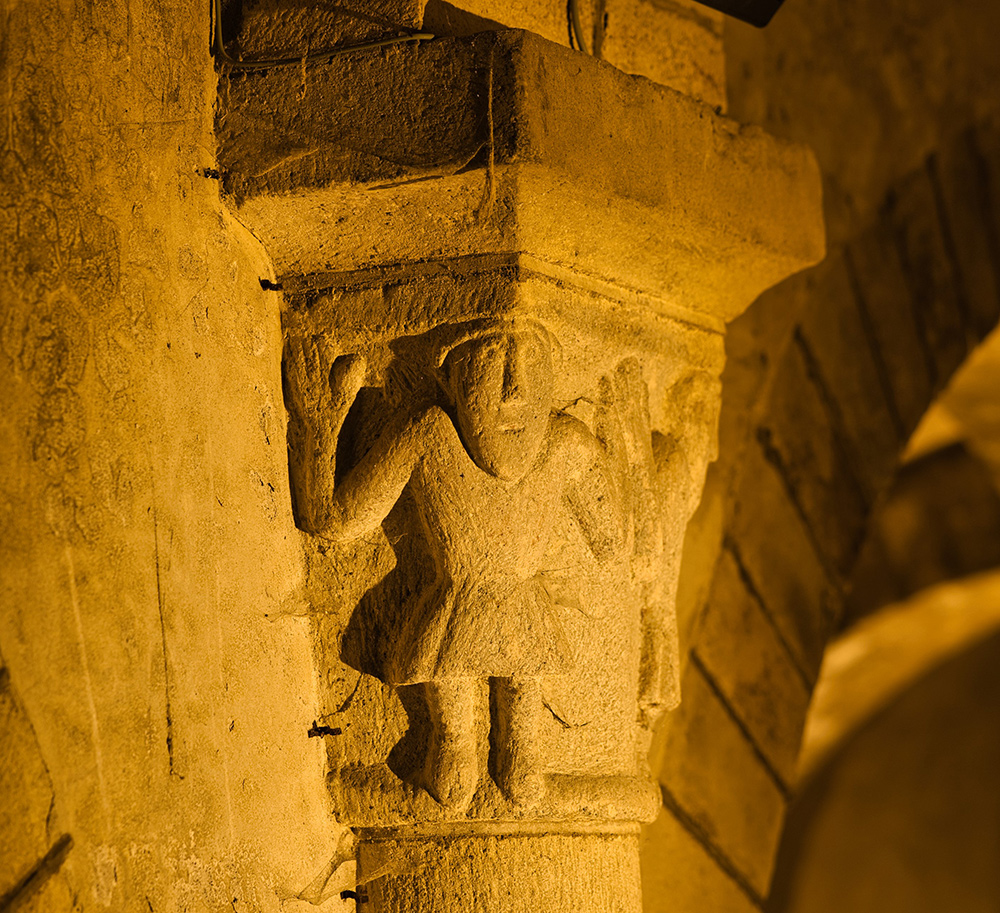
From the end of the 11th century onwards, sculptors created remarkable figured capitals featuring a variety of motifs, among which “the builders” and the “dancing couple” stand out. “The builders” depict two men dressed in long tunics cinched at the waist, with imposing stature. One carries a stone in his hand; the second is depicted with a long moustache and a double-pointed beard; he greets us and shows a small apron covering his tunic. According to local tradition, this is the master builder who depicted himself in this way; this face with the striking beard can also be found on a modillion on the outside. The “dancing couple” shows a man with his left hand on his waist, whilst the woman, dressed in a long pleated dress, dances with her arms raised in a whirl that lifts her braided hair. This could be a depiction of the traditional dance from Auvergne, bourrée.
Wooden Christ and Stravinsky Stained-glass Window
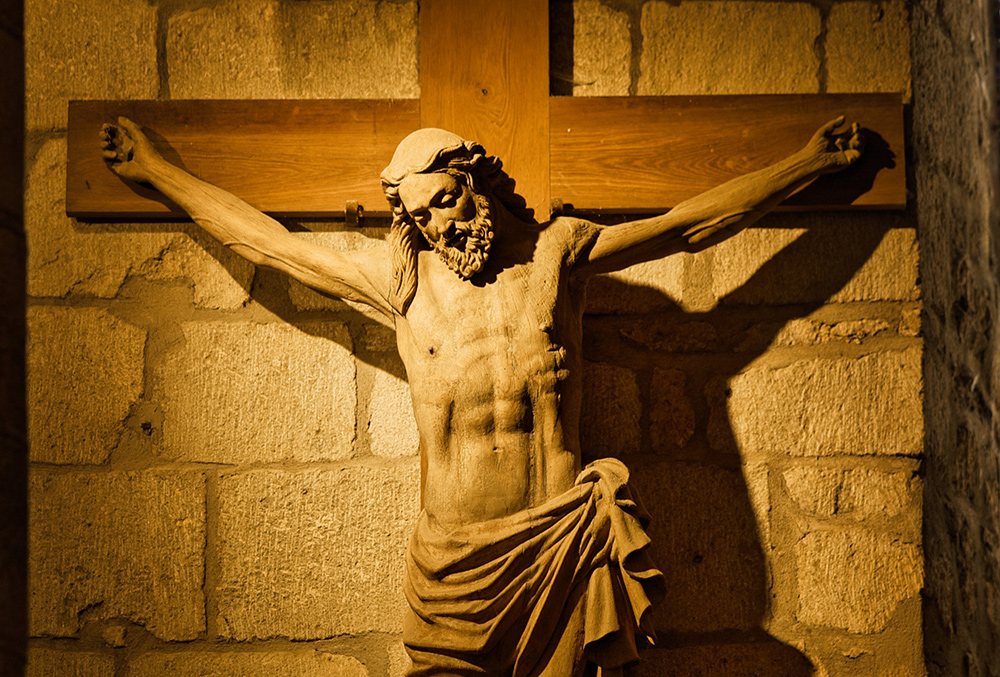
The St Peter’s Church houses a magnificent 16th-century oak Christ figure, classified as a historical monument since 1917. It was mounted on a gigantic cross in front of the church until the mid-20th century. It was eventually brought inside the church for safekeeping following restoration. The stained-glass window depicting ‘The Miraculous Catch of Fish’, which adorns the church façade, was donated to Menet by Théodore Stravinsky in 1952. As a painter and master glassmaker in Geneva, he associated with masters such as André Derain, Georges Braque and Picasso, thanks to his father, the famous composer Igor Stravinsky. The stained-glass window, made using lead and grisaille techniques, depicts Saint Peter’s net. It is divided into three panels, representing the dove of the Holy Spirit, the hand holding the net, and the result of the miraculous catch.
Place de la Musique
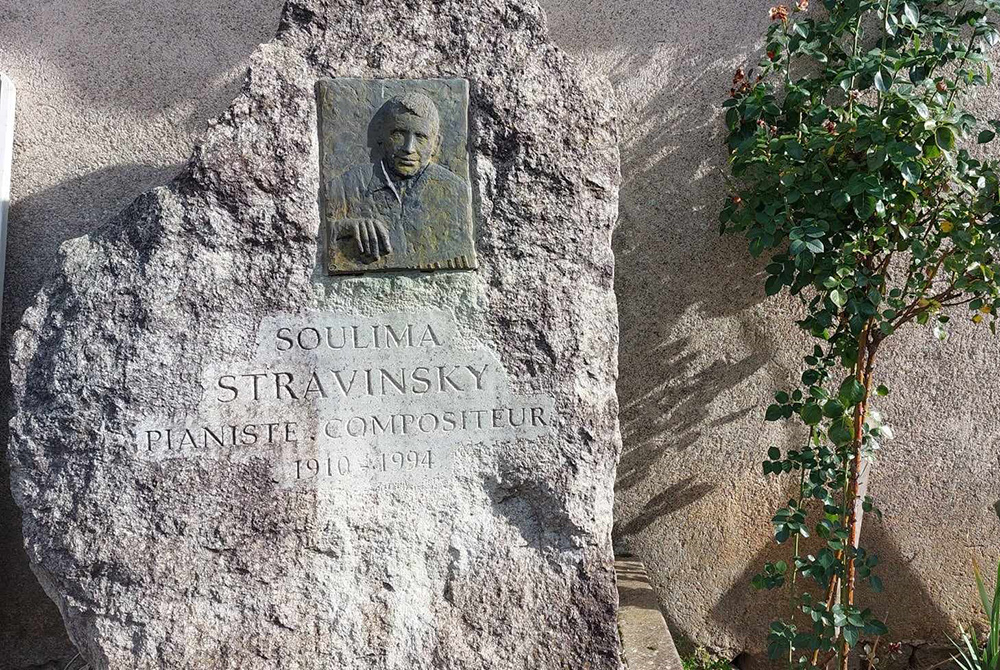
Surrounded by traditional houses, including the former presbytery with its ornate lintel, this square bears witness to the ingenuity of the builders of yesteryear, who constructed houses right up against one another to save on land and materials. One can easily imagine neighbourhood life centred around the square. In 1977, during a concert on this square, Soulima Stravinsky explained the origins of The Soldier’s Tale, written by his father, the great composer Igor Stravinsky, based on texts by Charles Ferdinand Ramuz. In 2011, a bronze memorial was erected on the square in tribute to the man who spent more than 40 summers in Menet: Soulima Stravinsky (1910-1994).
Menet and the Stravinsky family
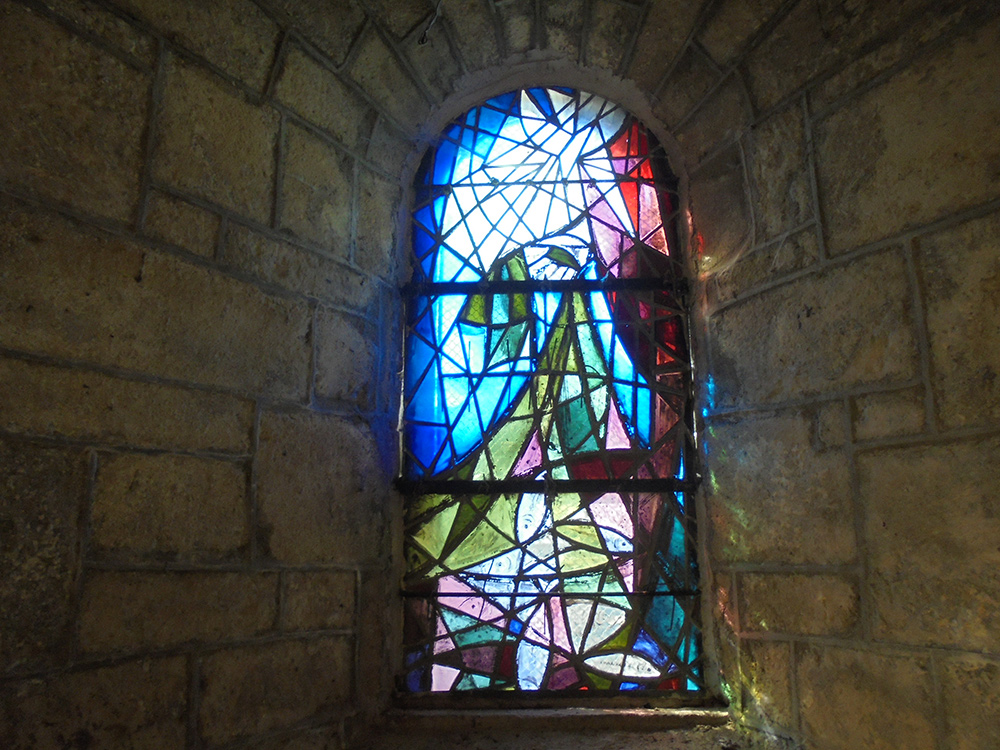
The link between the village and this illustrious family stems from Soulima Stravinsky’s attachment to Menet. The only musician among Igor Stravinsky’s four children, Soulima, a renowned pianist and composer, married Françoise, who was from Menet. Living in the United States, he spent every summer for nearly 40 years at the family mansion La Clidelle, in Menet. Appreciating the tranquillity of the lake and the Auvergne countryside, it is said that he loved to come and play and test his compositions in the St Peter’s Church, with its exceptional acoustics. This deep connection to the village gave rise to the Nuits Musicales Festival. The family’s influence extends beyond Soulima. His brother Théodore created a magnificent stained-glass window entitled ‘The Miraculous Catch of Fish’ in the church. The composer’s eldest son was a renowned artist of international repute.
Nuits Musicales de Menet
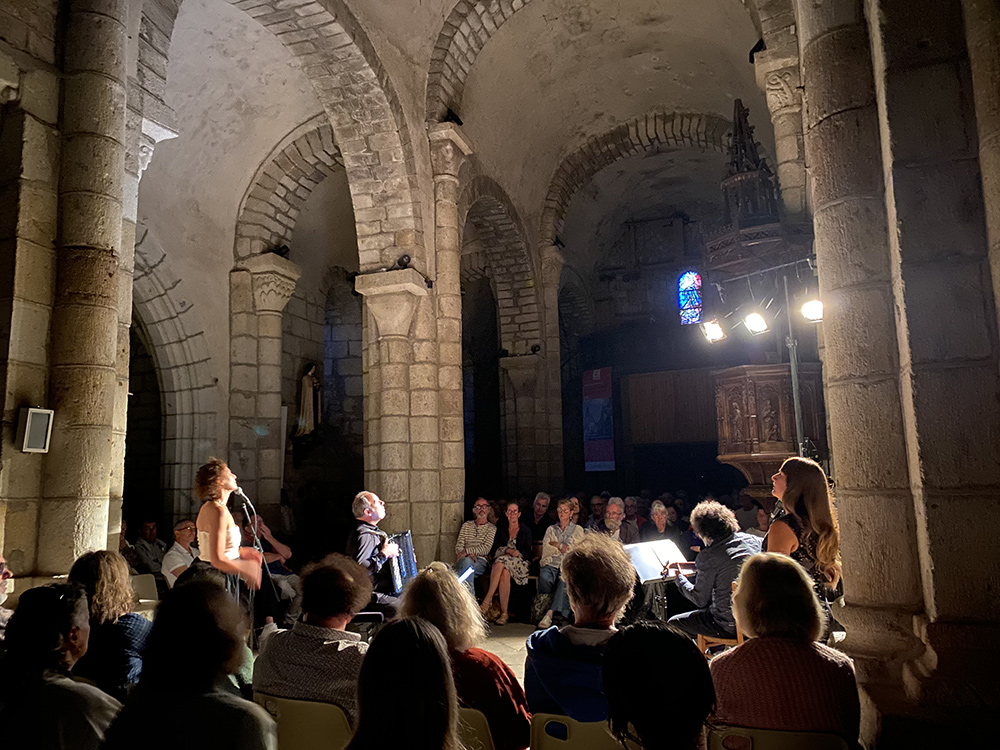
It was thanks to the initiative of a few residents of Menet, inspired by Soulima Stravinsky, that the Menet Music Nights Festival was launched in 1983. It features an eclectic programme of concerts: from the renowned National Orchestra of Auvergne to traditional music from regions near and far. The village comes alive with concerts every summer, whether on café terraces, at music masterclasses, or within the stunning setting of the St Peter's Church, which boasts exceptional acoustics. Over time, the event has become an unmissable annual fixture for music lovers.
Convent of St Joseph
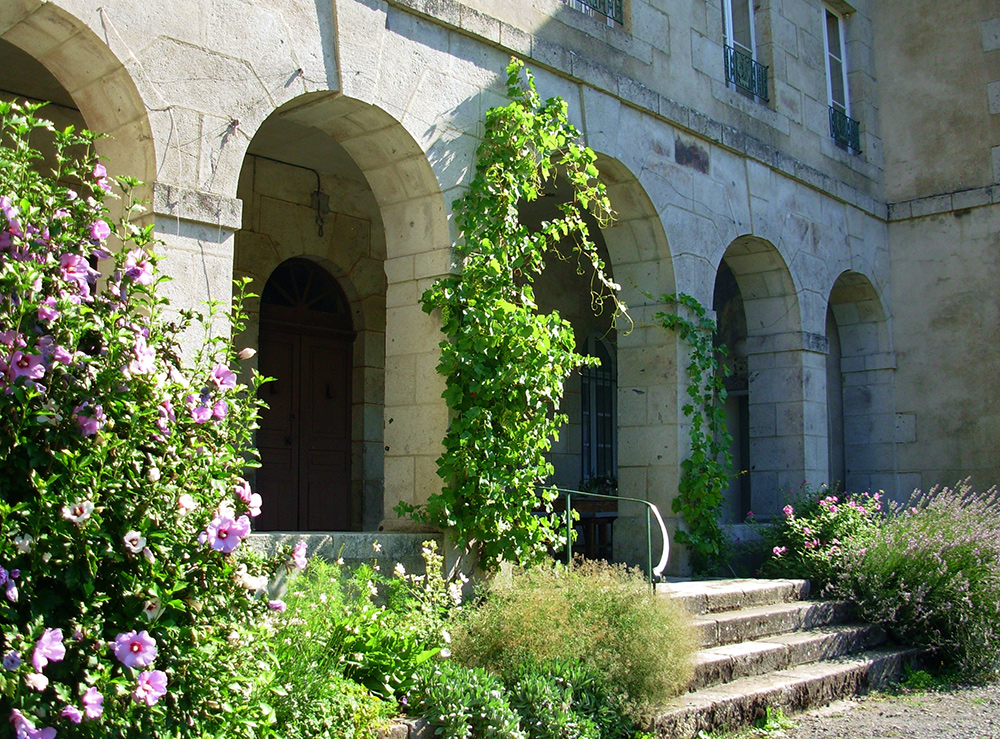
The Menet Convent was founded in 1848 by the Congregation of the Sisters of St Joseph of Saint-Flour. It became a religious school in 1855 thanks to a bequest of 8,000 gold francs made by Marguerite Agathe Raymond. The school closed its doors in 1955, after a century of existence. Transformed into a parish holiday camp, the old Menet convent hosted children from Ligugé, a commune on the outskirts of Poitiers, for a number of years. It was undoubtedly the memory of happy holidays spent in Menet that prompted former boarders, now adults, to buy the buildings and establish the Maison Familiale Poitou-Cantal, which remained in operation until 2014. Today, the former convent, now reoccupied by the local council, serves as a venue for gatherings and cultural events.
Notable Houses
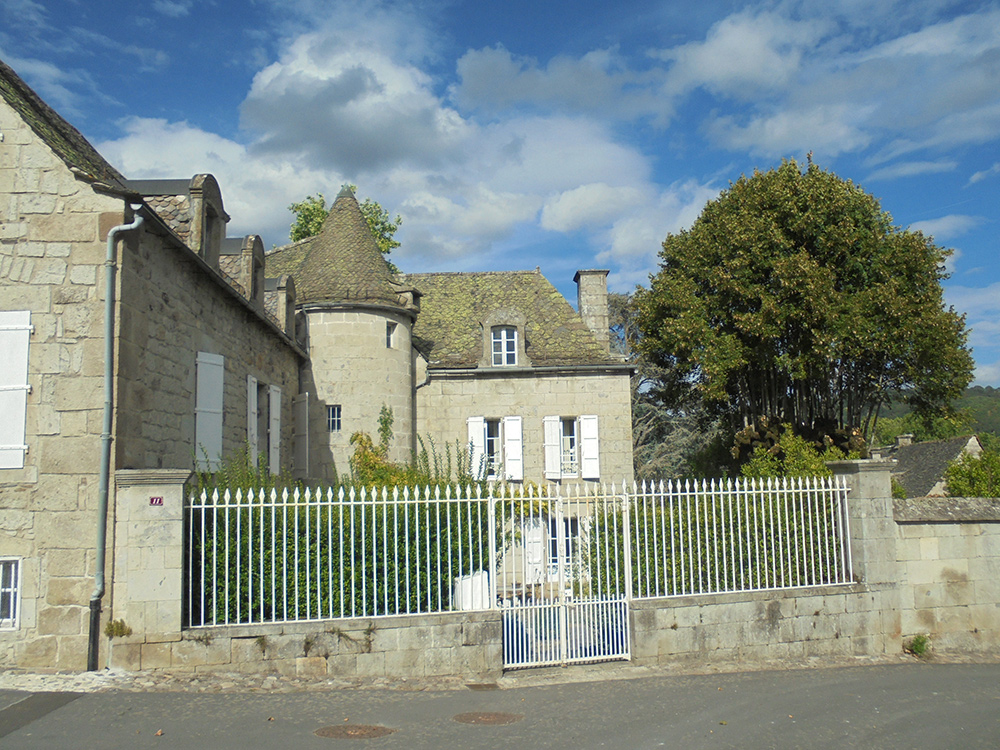
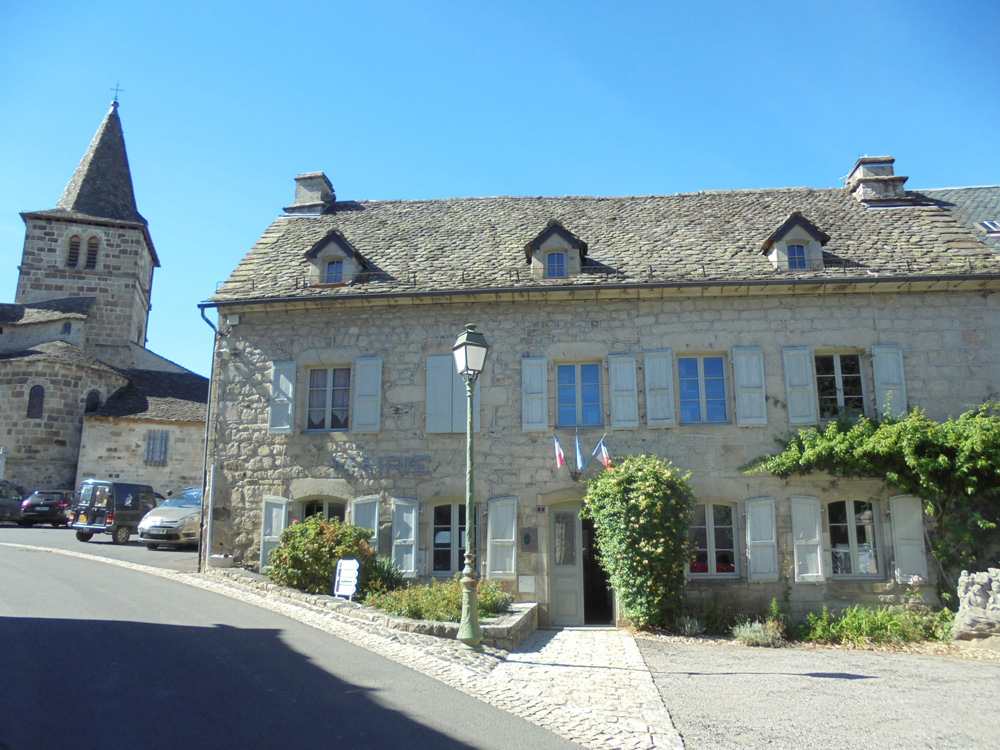
Menet stone, skilfully shaped by local stonemasons, gives the heart of the village a uniform appearance, both in terms of architectural style and the materials used in construction. The houses, generally dating from the early 19th century, are built entirely of trachyte, from the floor slabs to the chimney stacks. Several of these houses are arranged around the fountain square and the church, featuring a succession of gardens, vegetable patches and orchards. The Murat family owned the large, beautiful building with the wide balcony, flanked by a stable with three oculi. Some of the houses feature distinctive elements reflecting an aesthetic sensibility: the dormer windows and roof ridges are adorned with crosses and spheres.
Four Schools
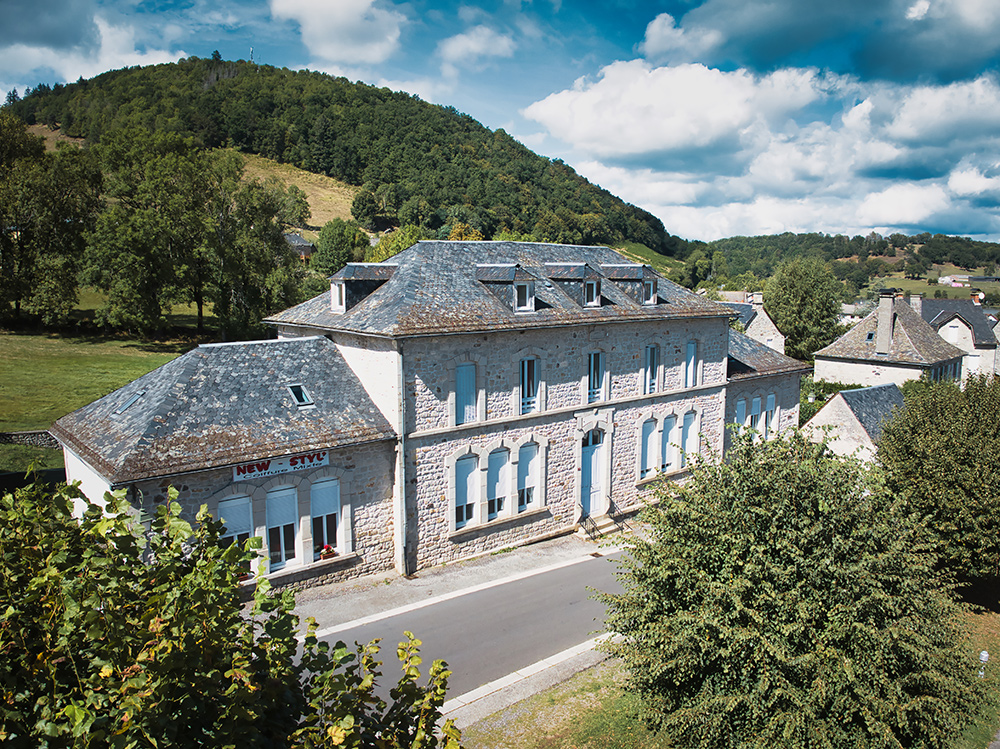
For several decades, the village of Menet was home to four schools: two state-run and two private. This reflects a sizeable population in the area and a thriving economy centred on stone-cutting and agriculture. In 1900, the local council erected a large building to house the state-run girls’ school and a second building for the boys, which is now the primary school. At that time, the religious education sector comprised a girls’ school run by the Sisters of St Joseph of Saint-Flour in the former convent, and a boys’ school run by the Little Brothers of Aurillac in the building that would much later become the Hôtel Restaurant du Lac. In 1955, with the departure of the sisters and the closure of the convent school, after many generations had been divided between state and private education, only the local public school remained.
Small-scale Heritage (Vernacular Heritage)
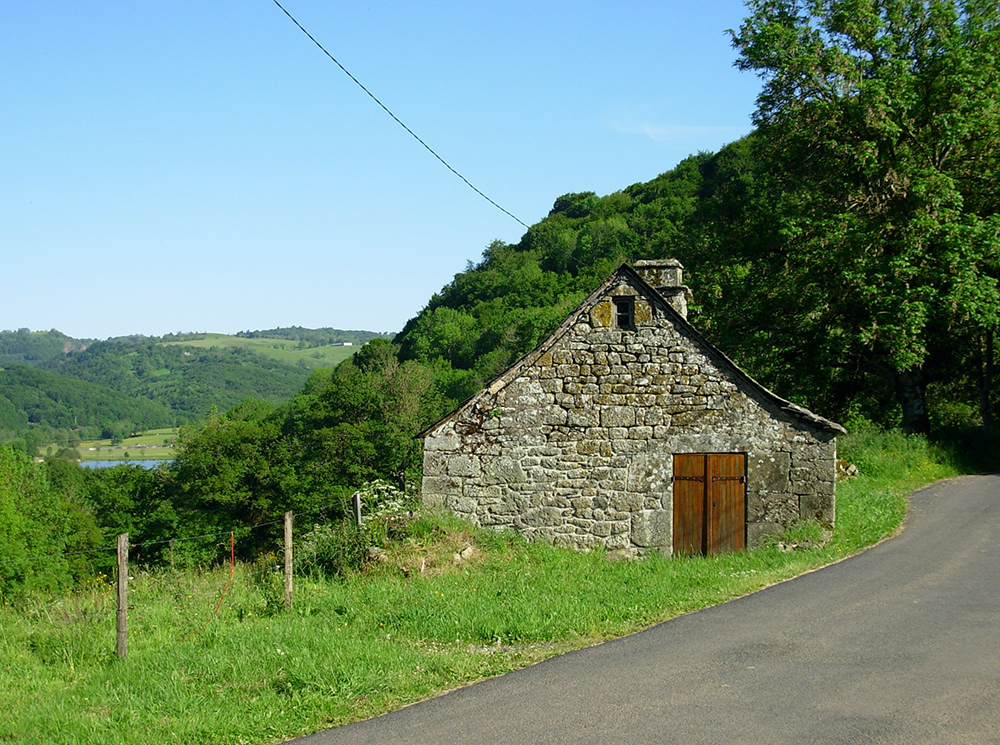
Menet boasts a significant small-scale heritage scattered throughout the hamlets of the commune. This high density reflects a very early concept of ‘community service’, dating back to the Middle Ages. Each hamlet had to be entirely self-sufficient, both in terms of baking bread and providing water for livestock and residents. The facilities could be built by the inhabitants and managed collectively. For example, the bread oven was lit once a month by a family from the hamlet, who would start the fire using wood gathered from the common land. The oven was built on the couderc, a communal grassy space in the centre of the village that housed the oven, the watering trough, the fountain, and often a wayside cross. Situated near the lake, the hamlet of Liocamp exhibits all these distinctive features.
Washhouses and Mills
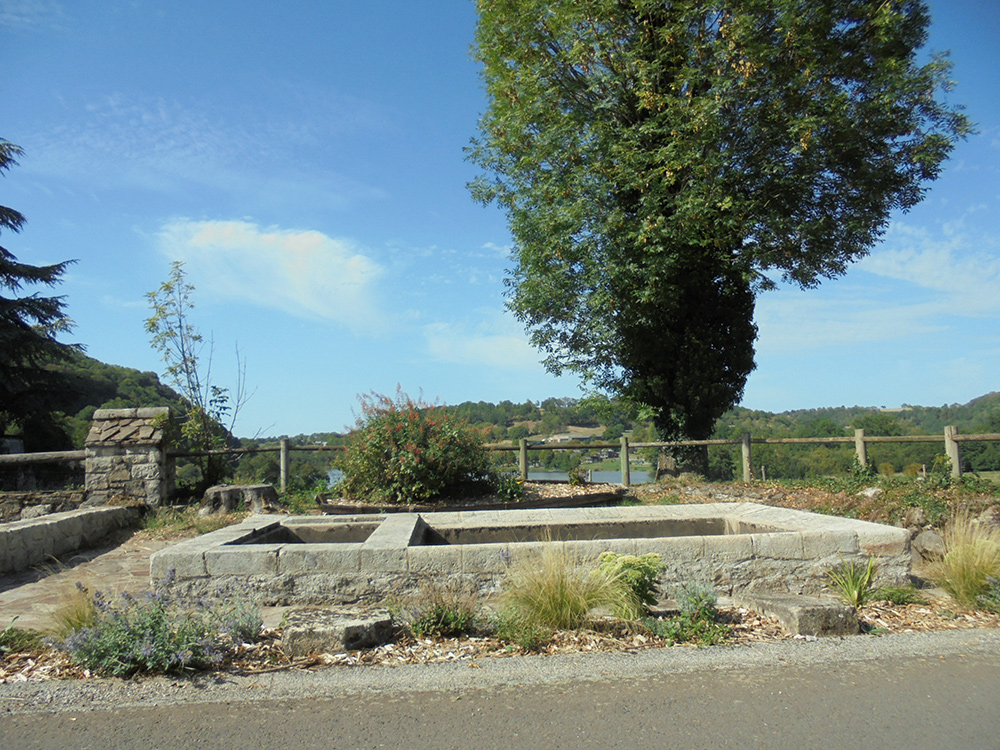
Menet had a large number of washhouses and mills. In the past, washhouses were busy communal facilities, essential for people who had no other means of washing their clothes. The mills, for their part, were private properties with very specific functions: mills for grain, mills for oil (walnuts and hazelnuts). The miller set his price either by keeping a portion of what had been pressed, or by asking for a sum of money. The wealthiest houses and farms had their own bread ovens and sometimes a mill. By charging a fee, the owners - who might be wealthy landowners, nobles or a religious order - granted access to local residents, thereby securing an income that could be quite substantial.
Lake Menet
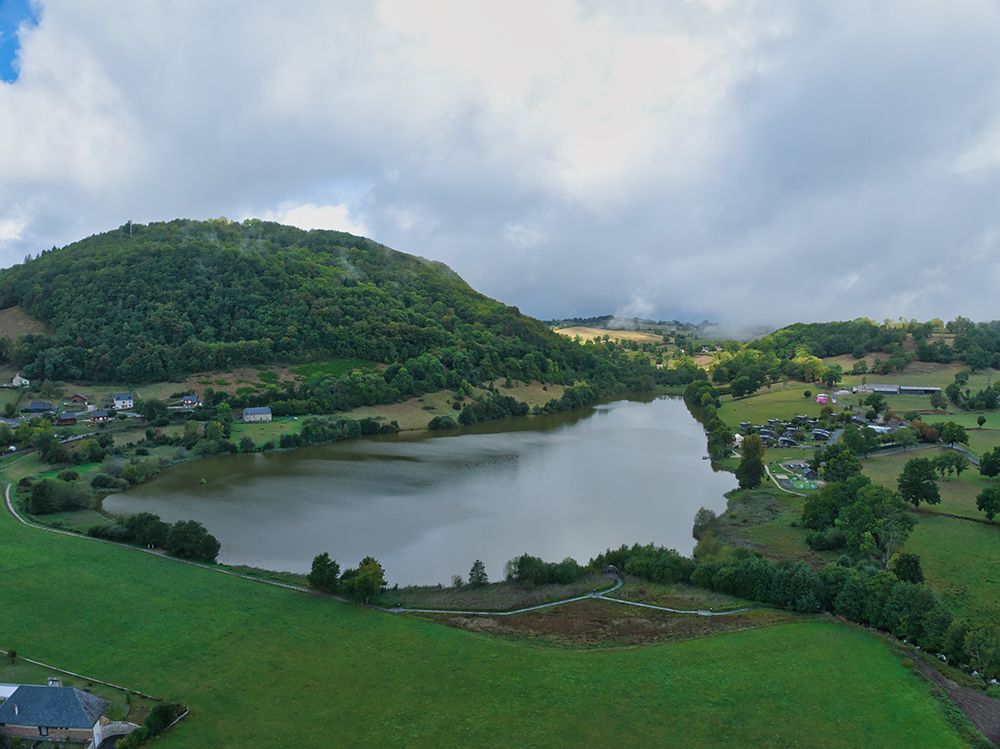
Situated at an altitude of 700 metres, Lake Menet is a natural glacial cross cliff lake covering 14 hectares and 6 metres deep, fed by springs on the slopes of the Puy de Menoyre. Its waters flow slowly into the River Sumène through dense vegetation which acts as a natural filter. Owned by the lords of the Château de Murat-la-Rabbe, and later by the Murat family, attempts were made to drain it in the 17th century, but these were halted by the Lord of La Clidelle, who owned a powerful mill downstream. In the early 19th century, it was decided once again to drain the lake in order to increase agricultural land. Fortunately, this decision was never carried out, which means we can now enjoy its shores.
Puy de Menoyre and the Quarries
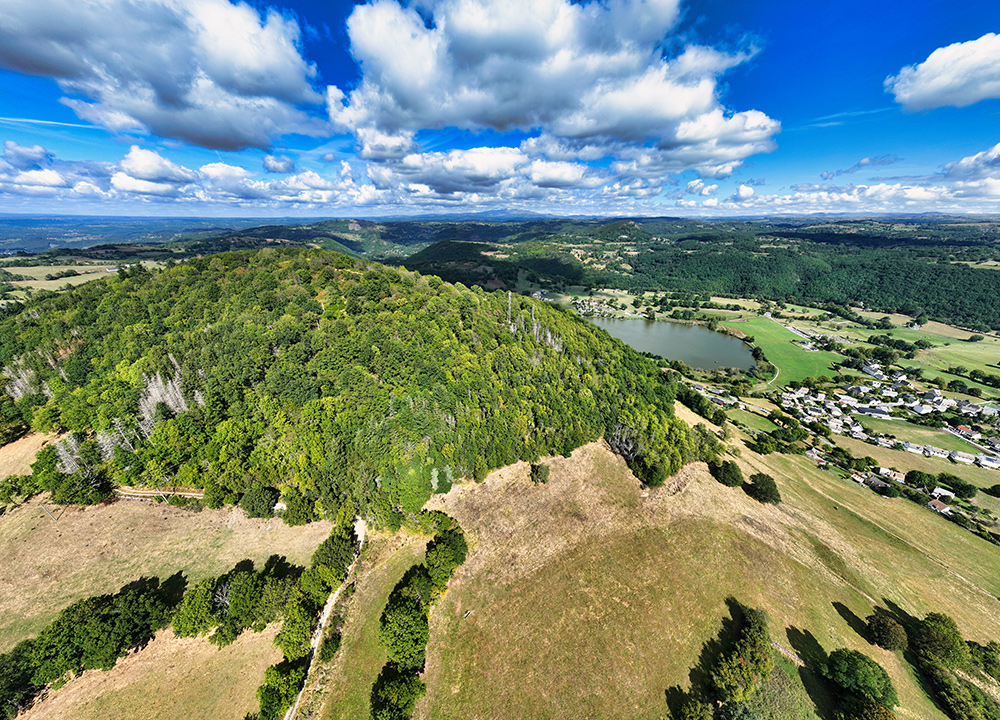
Located to the west and overlooking Menet, the Puy de Menoyre is an 800-metre-high basalt dome composed of light-coloured volcanic rock known as trachyte. When the volcanic vent first formed, rocks were trapped by the rising magma, sometimes forming tiny blue sapphires embedded in the rock, which are now impossible to find. Several abandoned quarries are still visible on its slopes, the largest being the Cheyrié quarry. In the past, the terraced slopes were home to vegetable gardens and buckwheat fields, as well as pastures for sheep and goats. A hike leads to the summit of the Puy de Menoyre, where a fortress stood in the Early Middle Ages (476 to 1000 AD) on a site occupied since the Neolithic period.
Puy de Menoyre and the Quarries
Located to the west and overlooking Menet, the Puy de Menoyre is an 800-metre-high basalt dome composed of light-coloured volcanic rock known as trachyte. When the volcanic vent first formed, rocks were trapped by the rising magma, sometimes forming tiny blue sapphires embedded in the rock, which are now impossible to find. Several abandoned quarries are still visible on its slopes, the largest being the Cheyrié quarry. In the past, the terraced slopes were home to vegetable gardens and buckwheat fields, as well as pastures for sheep and goats. A hike leads to the summit of the Puy de Menoyre, where a fortress stood in the Early Middle Ages (476 to 1000 AD) on a site occupied since the Neolithic period.
Menet and its Fairs
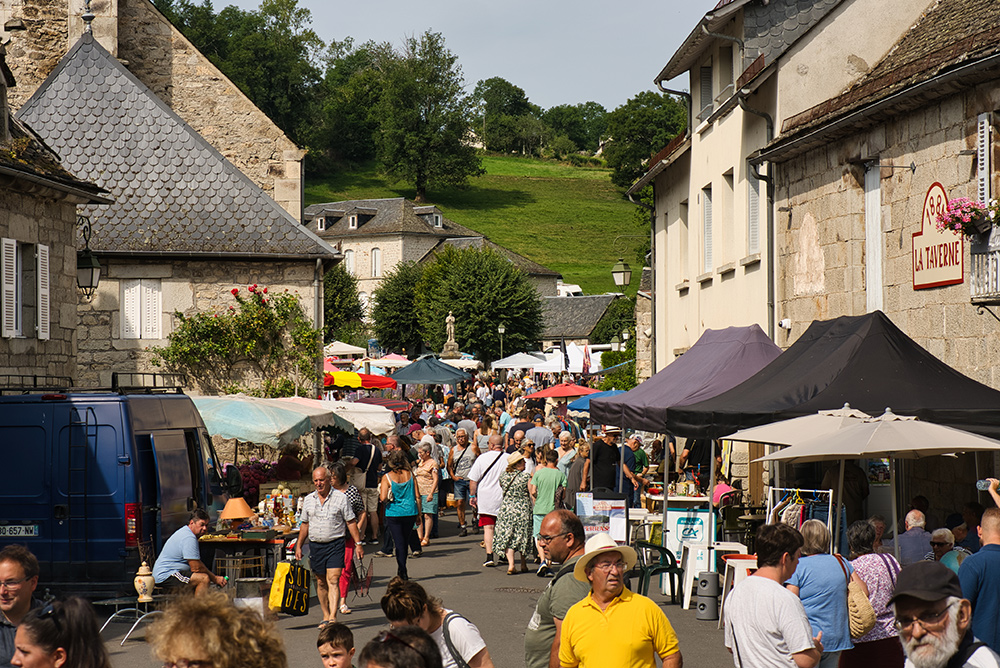
Auvergne is a region of fairs, occasions throughout the year when local farmers and traders from afar would gather to trade all sorts of livestock. In Menet, among the four major agricultural fairs that marked the seasons, the most popular was the St Martin’s Fair in mid-November. It was renowned for the quality of its goat and sheep sales, before the Salers cow became the sole presence following the Agricultural Revolution. The Salers cow is distinguished by its tall stature, dark mahogany red coat and slender, light-coloured lyre-shaped horns. The recent prosperity of this cattle breed is reflected in the high architectural quality of the barns, whose keystones on the façades bear dates from after the French Revolution. Today, this traditional fair remains a great success, centred around a market and a flea market.
International Stone Carving Symposium
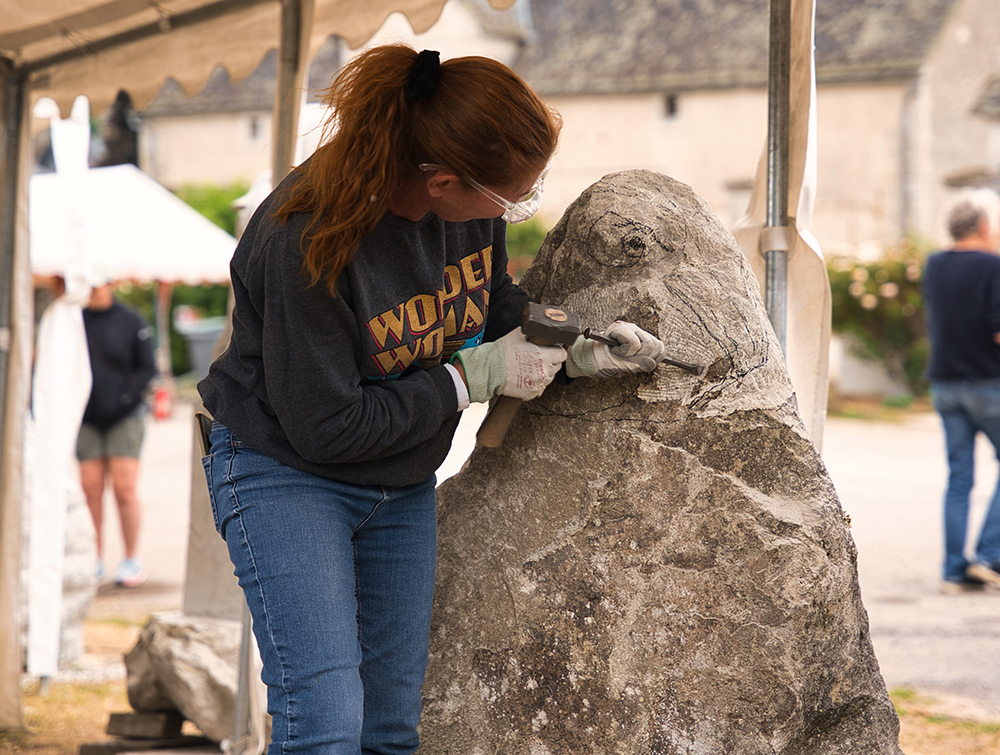
Organised by the Menet Stones (“Pierres de Menet”) Association since 1992, the symposium brings together artists from every continent for around ten days in July. Using trachyte stone, Menet’s local treasure, they bring sculptures to life with chisels and burins, creating works based on a given theme. Alongside the artistic creation, courses in dry-stone walling and introductory sessions in stone cutting and sculpture are also offered, with the aim of promoting the local craftsmanship and Menet stones. The original creations produced by the artists during the symposium are sometimes purchased by private individuals, but most of the works can be viewed by everyone as they walk along the Carved Stones Trail.
Carved Stones Trail
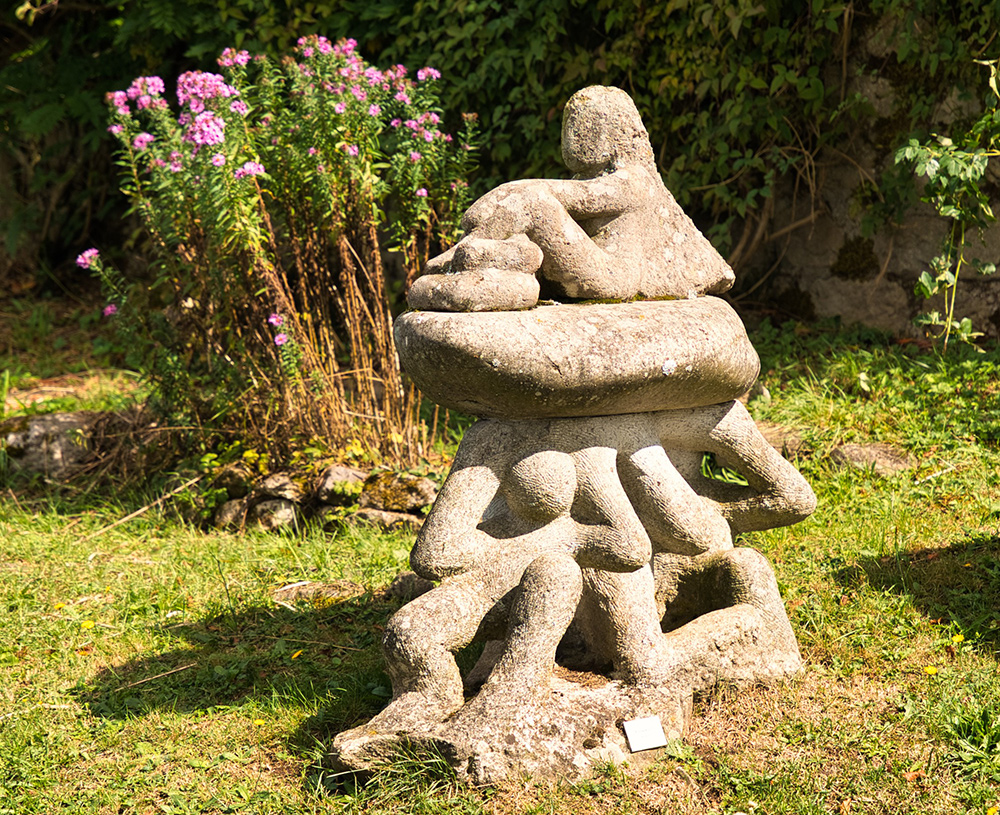
The Carved Stones Trail (Chemin des Pierres sculptées) is a poetic and inspiring path that celebrates the tradition of Menet’s stonemasons. A true open-air art trail, this 3-km path on the outskirts of the village offers a magnificent route lined with works created every summer since 1992 during the carving symposium. This trail showcases the artists’ skill whilst paying tribute to the ancestral craftsmanship and identity of Menet.
Local Delicacies and Life in Menet
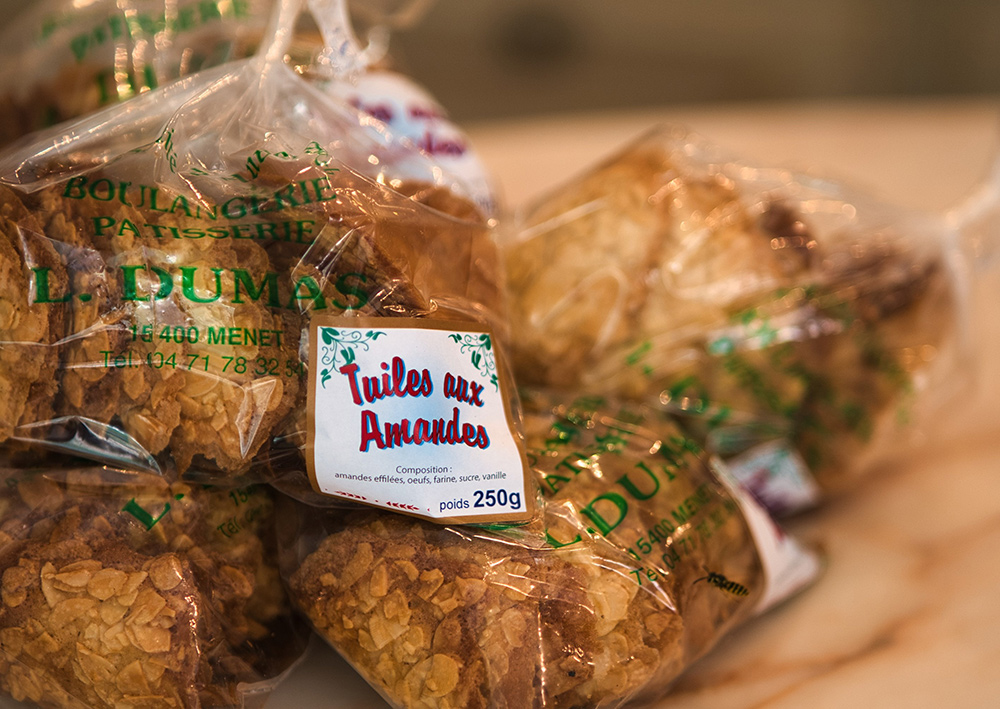
Alongside the local associations, the shops and craftspeople bring the village to life. The famous almond tiles from the bakery-patisserie are reminiscent of Menet’s slate and stone roofs. The village’s cafés and restaurants showcase local specialities such as truffade, aligot and stuffed cabbage. As for the craftspeople, alongside their shops, they offer introductory workshops for young and old alike.
Mansion and Mill of La Clidelle
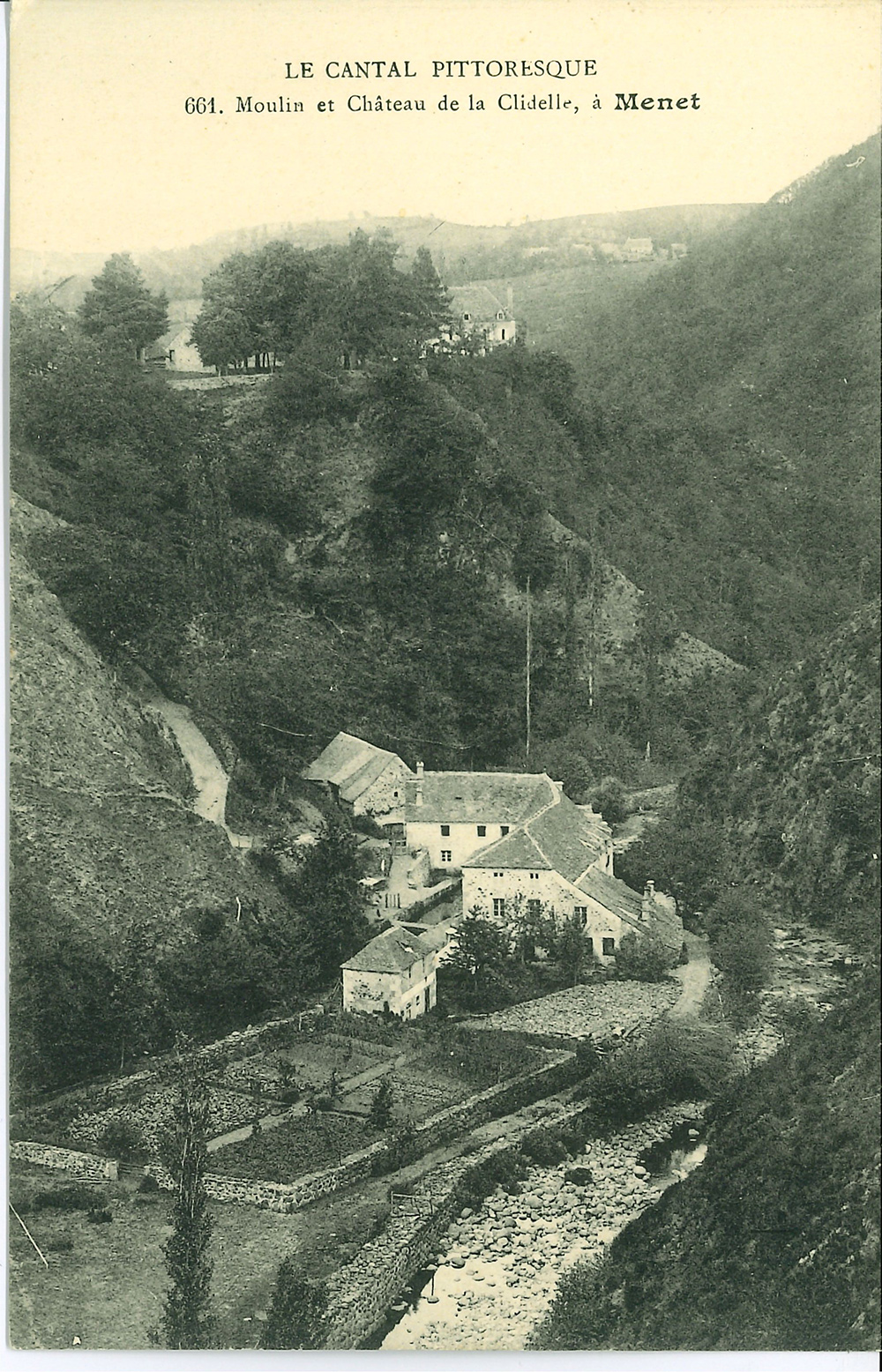
Before becoming the home of Soulima Stravinsky’s wife, La Clidelle served various purposes. The mansion is a beautiful building, seemingly suspended above a deep ravine; it was once the seat of a fiefdom belonging to the House of La Valette, a family of ancient knighthood, traces of which can be found as far back as 1370. Next to it, on the right bank of the River Sumène, lies a cold mineral spring, now abandoned, which in the 18th century was believed to possess certain healing properties and was frequented by a large number of patients. La Clidelle Mill dates from 1786 and employed around twenty people.

Ce projet de carte interactive est porté par les associations Petites Cités de Caractère® de France, Petites Cités de Caractère® en Auvergne Rhône Alpes, Petites Cités de Caractère® du Cantal et par la commune de Menet.
Il est soutenu financièrement par la convention FNADT du Commissariat Massif Central, par l'appel à projet "patrimoine et numérique" de la Région Auvergne Rhône-Alpes, et par la Fondation d’Entreprises du Crédit Agricole Centre France.
Le plan de la commune (visuel de fond) a été réalisé par Laura Catheline - atelier passage.
Les traductions en anglais ont été réalisées par l'Office de tourisme de la Châtaigneraie Cantalienne.
Les voix ont été produites et enregistrées par Hélène Poussin - Compagnie « les pieds bleus » (version française), Nico productions (version anglaise).
Les photos ont été produites et réalisées par Antom Productions - Anthony Moujol, Hubert Mirabel, Laurent Sestas, Mairie de Menet, Petites Cités de Caractère®
La vidéo a été produite et réalisée par Petites Cités de Caractère®.
Conception et développement de la carte interactive par Tabula Rasa.



Ce projet de carte interactive est porté par les associations Petites Cités de Caractère® de France, Petites Cités de Caractère® en Auvergne Rhône Alpes, Petites Cités de Caractère® du Cantal et par la commune de Menet.
Il est soutenu financièrement par la convention FNADT du Commissariat Massif Central, par l'appel à projet "patrimoine et numérique" de la Région Auvergne Rhône-Alpes, et par la Fondation d’Entreprises du Crédit Agricole Centre France.
Le plan de la commune (visuel de fond) a été réalisé par Laura Catheline - atelier passage.
Les traductions en anglais ont été réalisées par l'Office de tourisme de la Châtaigneraie Cantalienne.
Les voix ont été produites et enregistrées par Hélène Poussin - Compagnie « les pieds bleus » (version française), Nico productions (version anglaise).
Les photos ont été produites et réalisées par Antom Productions - Anthony Moujol, Hubert Mirabel, Laurent Sestas, Mairie de Menet, Petites Cités de Caractère®
La vidéo a été produite et réalisée par Petites Cités de Caractère®.
Conception et développement de la carte interactive par Tabula Rasa.