

Saint-Urcize
Auvergne-Rhône-Alpes, Cantal
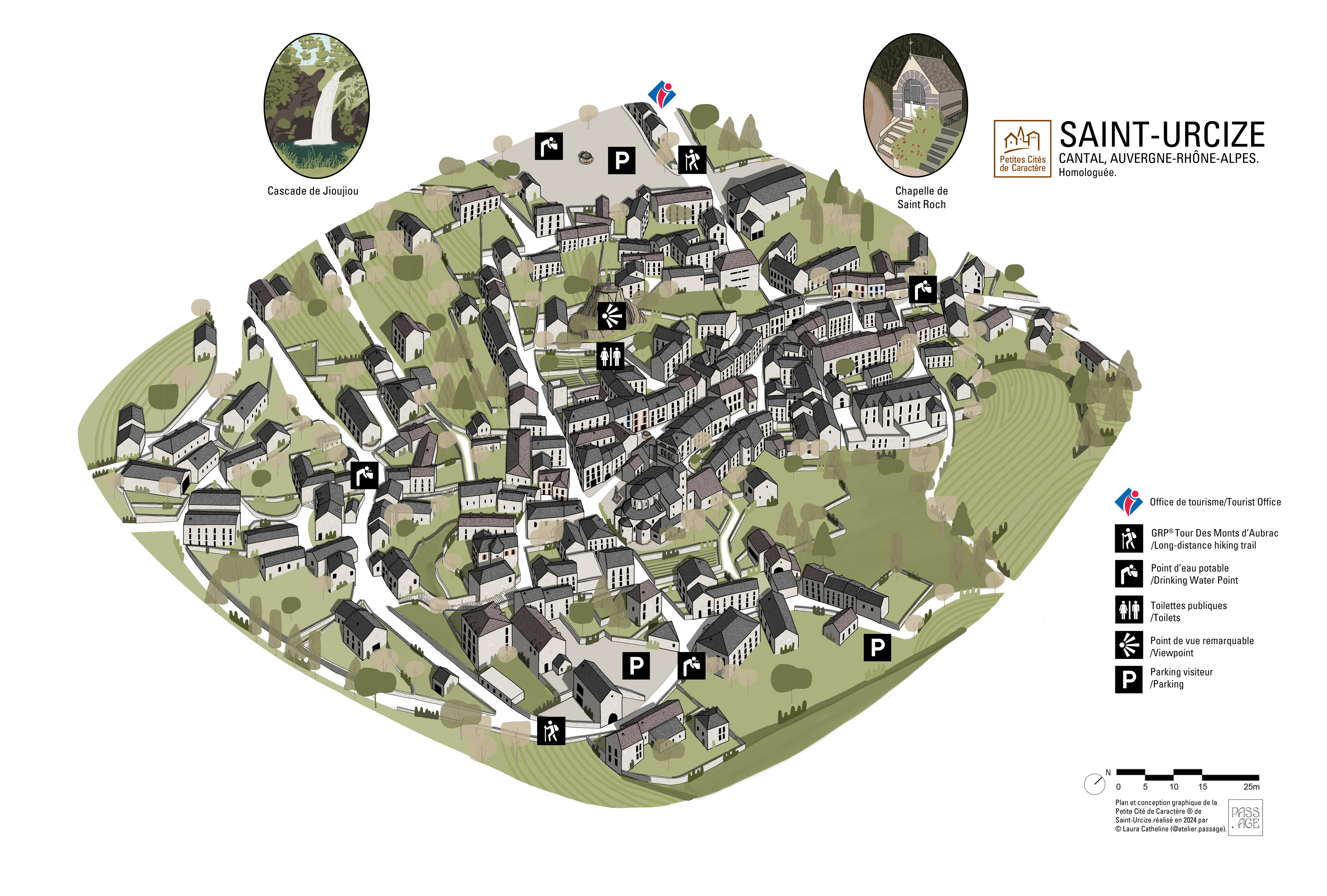
Saint-Urcize, Petite Cité de Caractère®
Saint-Urcize is designated Petite Cité de Caractère®. As such, it forms part of a national project aimed at promoting and protecting the architectural heritage of little towns across France. Through tourism, the initiative encourages visitors to embrace the local culture by strolling through the streets, learning about the history of the area, taking part in local events, and discovering the local way of life. In Cantal, there are several Petite Cité de Caractère® little towns to discover. The digital map will help you navigate each of them and highlight their main attractions.
Saint-Urcize, Town in Aubrac
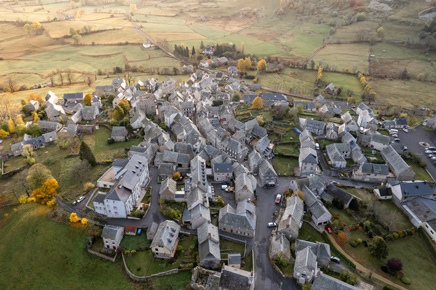
Built at an altitude of 1,100 metres in the heart of the volcanic plateau, the town seems floating between the sky and the valleys. A powerful seigneury in Aubrac since the 11th century, Saint-Urcize charms visitors with the unity of its medieval architecture: basalt or granite walls, steep roofs covered with slate or stone slabs (lauzes), and façades featuring carved lintels and old dormer windows fitted with pulleys for hoisting hay into the attics. The Saint Peter’s and Saint Michael’s Church is also a stop on the Way of St James. The village features narrow, winding alleyways, some of which are stepped, as the town is built in a compact layout to shelter from the wind; it is also fortified against attacks by routiers (marauding soldiers whose gangs ravaged the countryside), who threatened residents and pilgrims or acted on behalf of the English during the Hundred Years’ War.
Fortress Tower
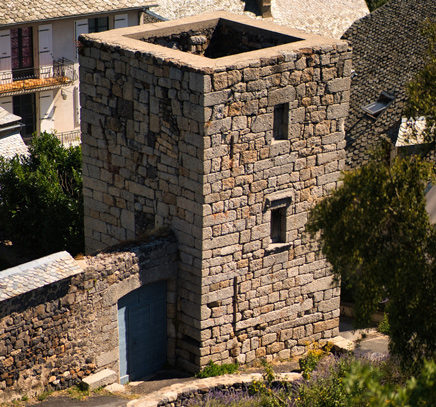
Built during the 12th and 13th centuries and reinforced after the Hundred Years’ War, the fortress tower features horizontal arrowslits on the ground floor, and Gothic openings added later to provide light and decoration. The keep, known as the ‘Salle Court’, was razed to the ground in 1666, following the conviction of the Lord of Saint-Urcize by the special royal courts known as the ‘Grands jours d’Auvergne’ (“Great Days of Auvergne”). This measure, introduced by Louis XIV on the grounds that justice administered in his name was not in keeping with his vision of absolute monarchy, was a brutal means of bringing the rebellious nobility to heel. In Saint-Urcize, this led to the complete destruction of the castle situated on what is now known as the Virgin’s Rock (Rocher de la Vierge). Nearby stood the fortified gate, the Portal Souteyra (‘Lower Gate’ in Occitan).
Former Lord’s Residence Ipcher du Roc
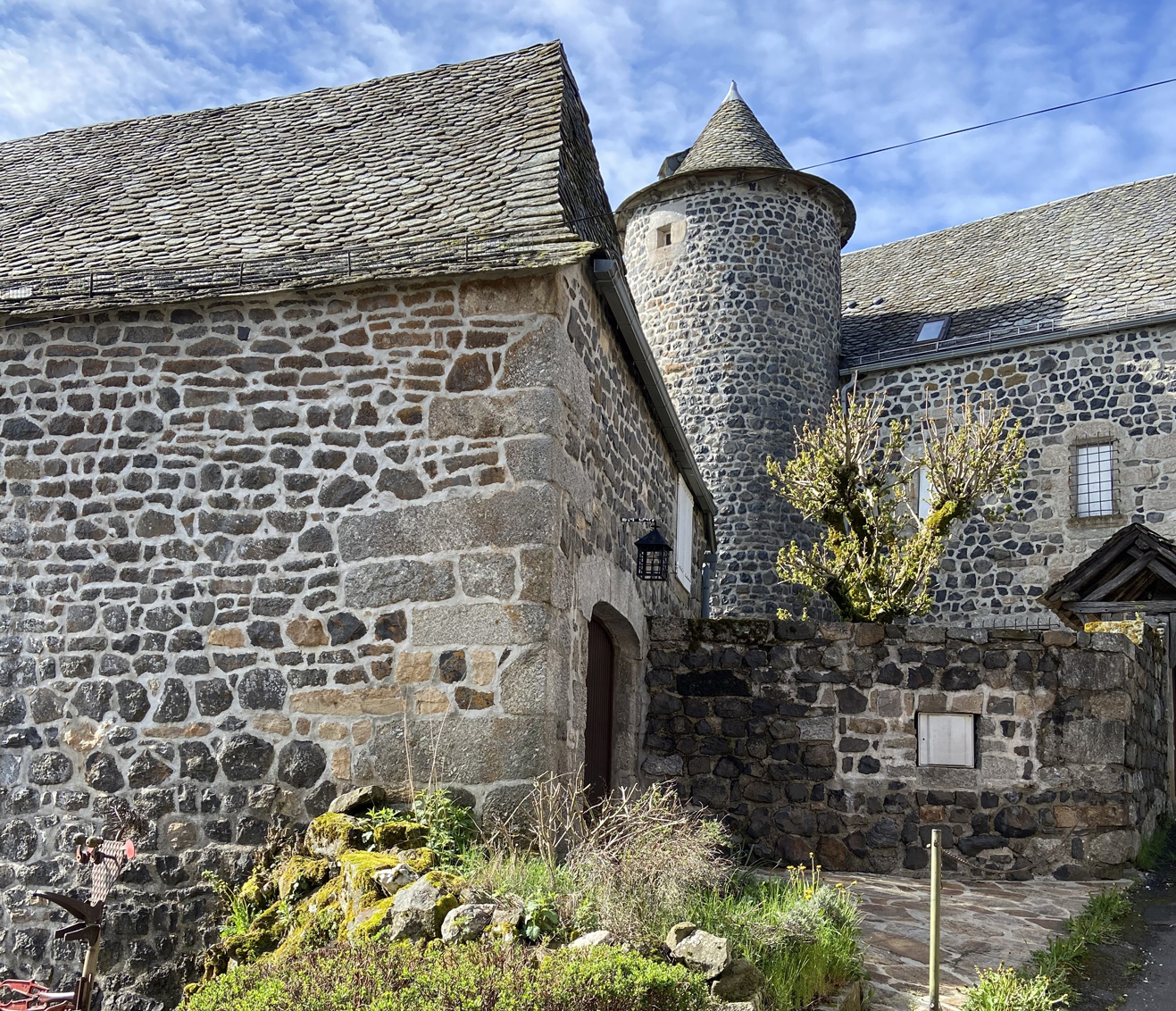
This characterful house was once the residence of the bailiff, who acted as the representative of the king or a lord. Within the bailiwick, he administered justice, collected taxes and tithes (religious tax), and exercised administrative and military control over the feudal territory.
Podevigne de Grandval House
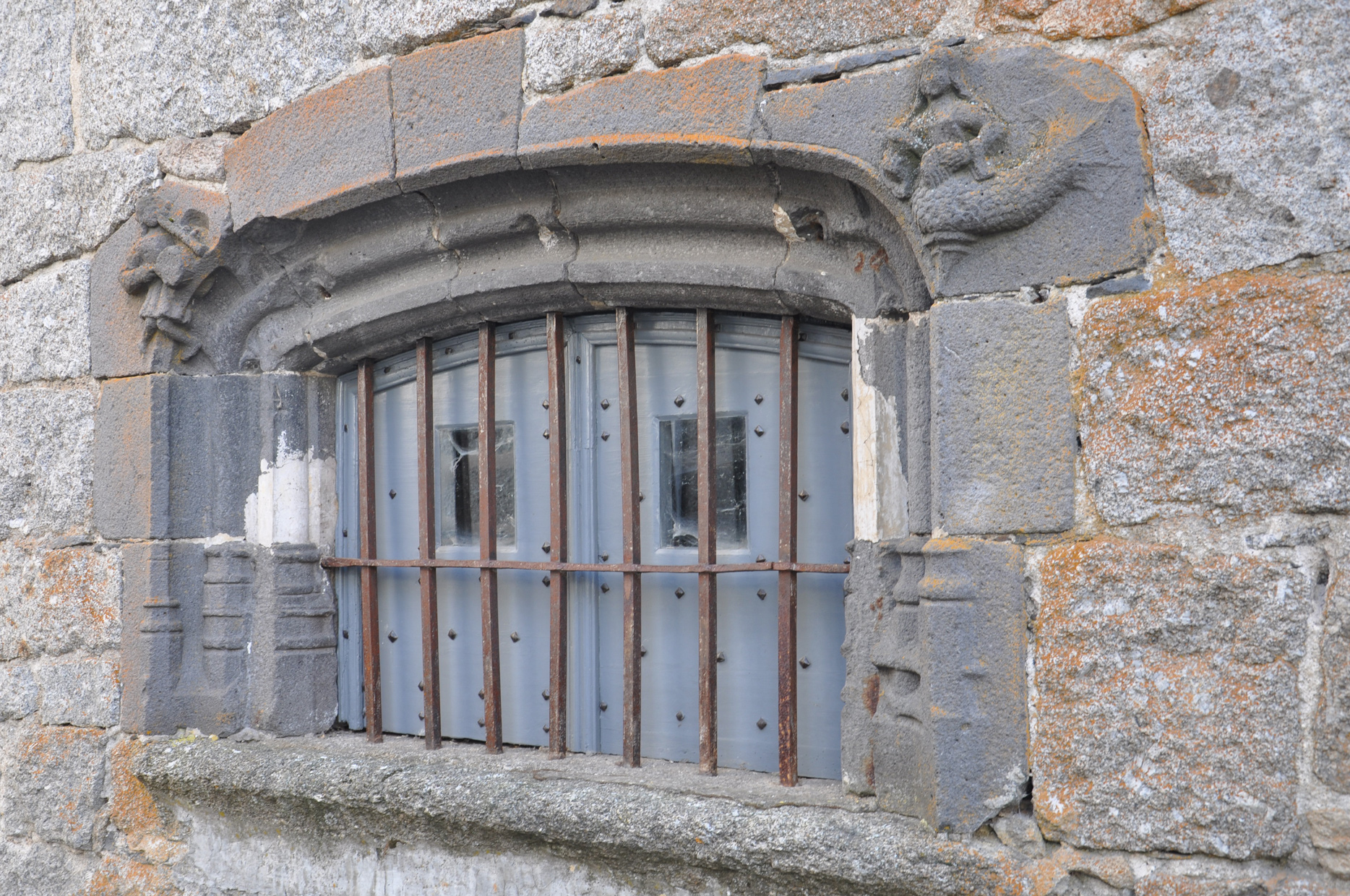
Built in the late 15th and early 16th centuries, on the edge of the former castle, the Podevigne de Grandval House was erected to house the bailiwick. Listed as a Historic Monument in 2007, the building features two right-angled wings, linked by an imposing spiral staircase, and a Renaissance façade with finely carved lintels above the windows: a flute player stands alongside a mermaid, a small dismembered figure, and even a mysterious eye gazing towards the church. Inside, one discovers a monumental Gothic fireplace, adorned with Jean Podevigne’s monogram, and the painted ceiling of the living quarters overlooking the courtyard. A remarkable heritage site, unique in France, these paintings feature an original design with around ten speech bubbles containing Bible verses in Latin, alternating with geometric and floral motifs.
Vaissier House
Built in 1788, the Vaissier House has had several different uses. Initially a notary’s office, it later housed a school run by the Catholic Friars, then a private school, before becoming a guest house.
Poustel Stairs
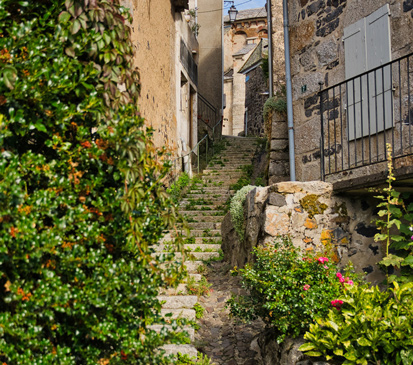
Outside of the former city walls, the Poustel stairs – the longest in Saint-Urcize – links the lower part of La Côte district to the church. Its wide, spaced-out steps allowed mules loaded with goods to pass through. The word ‘poustel’, meaning ‘pole’ in Occitan, is a reminder of the execution posts that once stood in the ‘fon rouge’ district, which these steps served. In the past, this neighbourhood was home to the patibular forks (‘fourches patibulaires’ in French) – a gallows consisting of several pillars that were erected in the countryside, usually on high ground and in plain view, to display those condemned to death after their hanging.
Saint Joseph’s Hospice
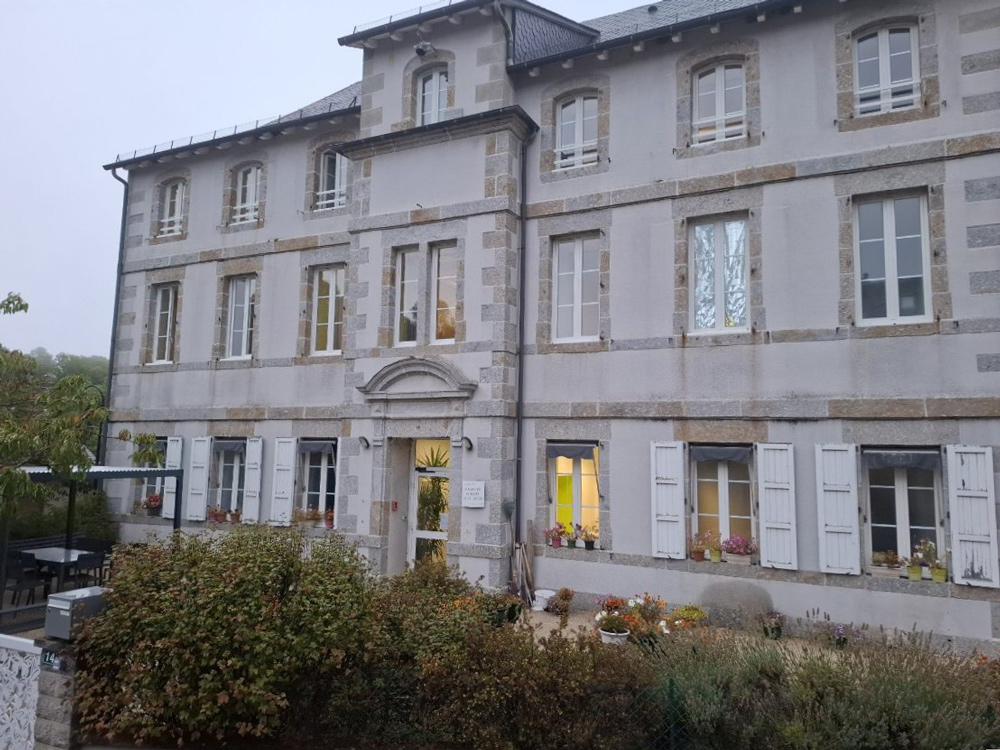
Dedicated to Saint Joseph, the original building was constructed in 1881 to provide a home for the sick and the elderly most in need. Now a residential care home for the elderly (“établissement d'hébergement pour personnes âgées dépendantes” - abbreviated EHPAD in French), it continues to fulfil its mission of providing shelter and care.
A Town related to Sacred
.jpg)
The town’s name comes from Urcisius, the Bishop of Cahors, who travelled to Saint-Urcize in the 6th century to deliver judgement at a council. Intimately linked to the sacred, the town boasts a remarkable religious heritage, including the Romanesque church housing the chalice of Louis XVI, as well as an ambulatory typical of buildings welcoming pilgrims on the Way of Saint James. In the 18th century, an influential confraternity of white penitents was established there, highlighting the town’s religious activity and fervour.
Saint Peter’s and Saint Michael’s Church
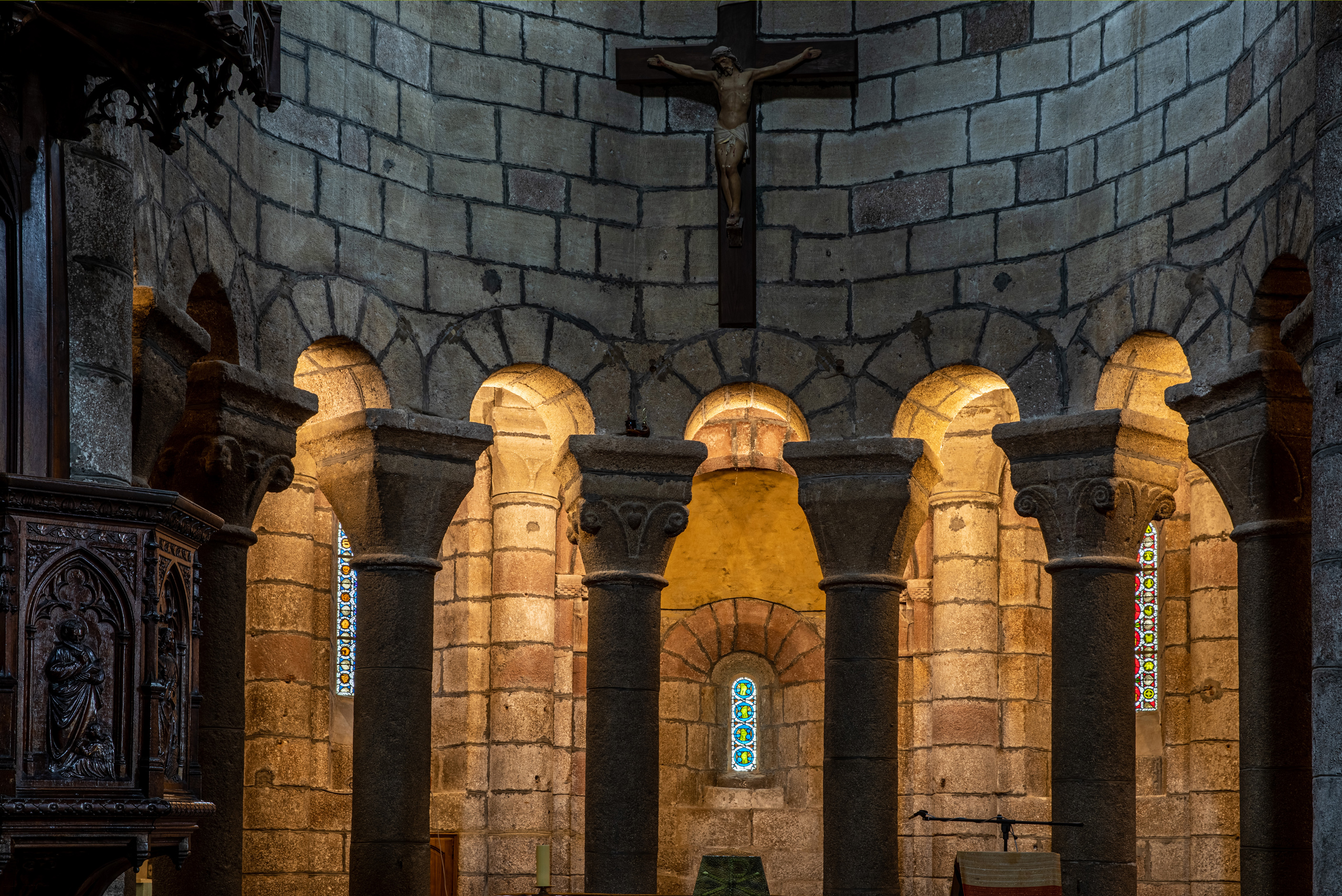
The Saint Peter’s and Saint Michael’s Church, classified as a ‘Historic Monument’ in 1921, is a priory church attached to La Chaise-Dieu since 1184. It is striking for its massive, compact appearance: a short nave opening onto a chevet with an ambulatory and three radiating chapels, a layout not found elsewhere in Haute-Auvergne. Half Romanesque, half Gothic, it was built in the 12th century and further embellished in the 14th. It is distinguished by its four-arched bell-gable, rebuilt in the 19th century, which sets the pace of town life. The South portal and the North chapel recall Gothic influence, whilst the carved scallop shell above the entrance evokes the pilgrims to Santiago de Compostela, many of whom once found refuge and safety here. On the outside, modillions and sculptures depict a symbolic world: Saint Peter holding the key to paradise, mythical griffins and plant motifs.
Sacred Bestiary of the Stained-Glass Windows
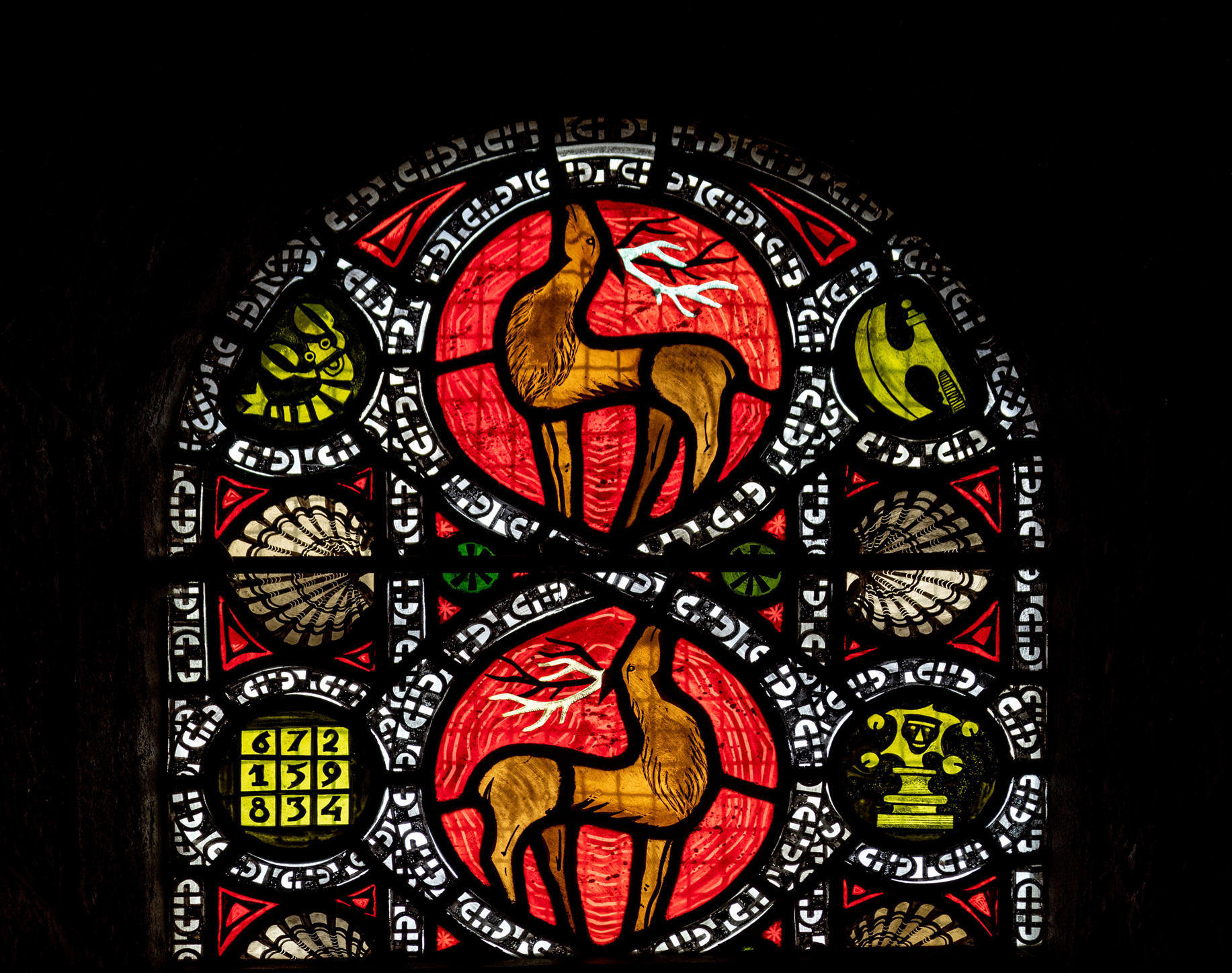
Since 1991, seven contemporary stained-glass windows have illuminated the church’s ambulatory. The stained-glassmaker Alain Makaraviez drew inspiration from Louis Charbonneau-Lassay’s book ‘Le bestiaire du Christ’ (‘The Bestiary of Christ’), published in 1941. He revives a medieval tradition in which animals carry spiritual symbolism, depicting creatures found in the Bible. The stag seeking to drink evokes the image of the thirst of believing souls seeking the Eucharist (Holy Communion); the swan expresses an ideal and pure love; the centaur, an allegory of savagery, represents violence tamed by Christ; the falcon’s flight signifies the soul’s ascent towards the divine; the dolphin symbolises the helpful fish that guides souls; the fish is a mystical sign used by the early Christians; the griffin, half-eagle, half-lion, embodies strength and wisdom.
Saint-Michael’s Funeral Chapel
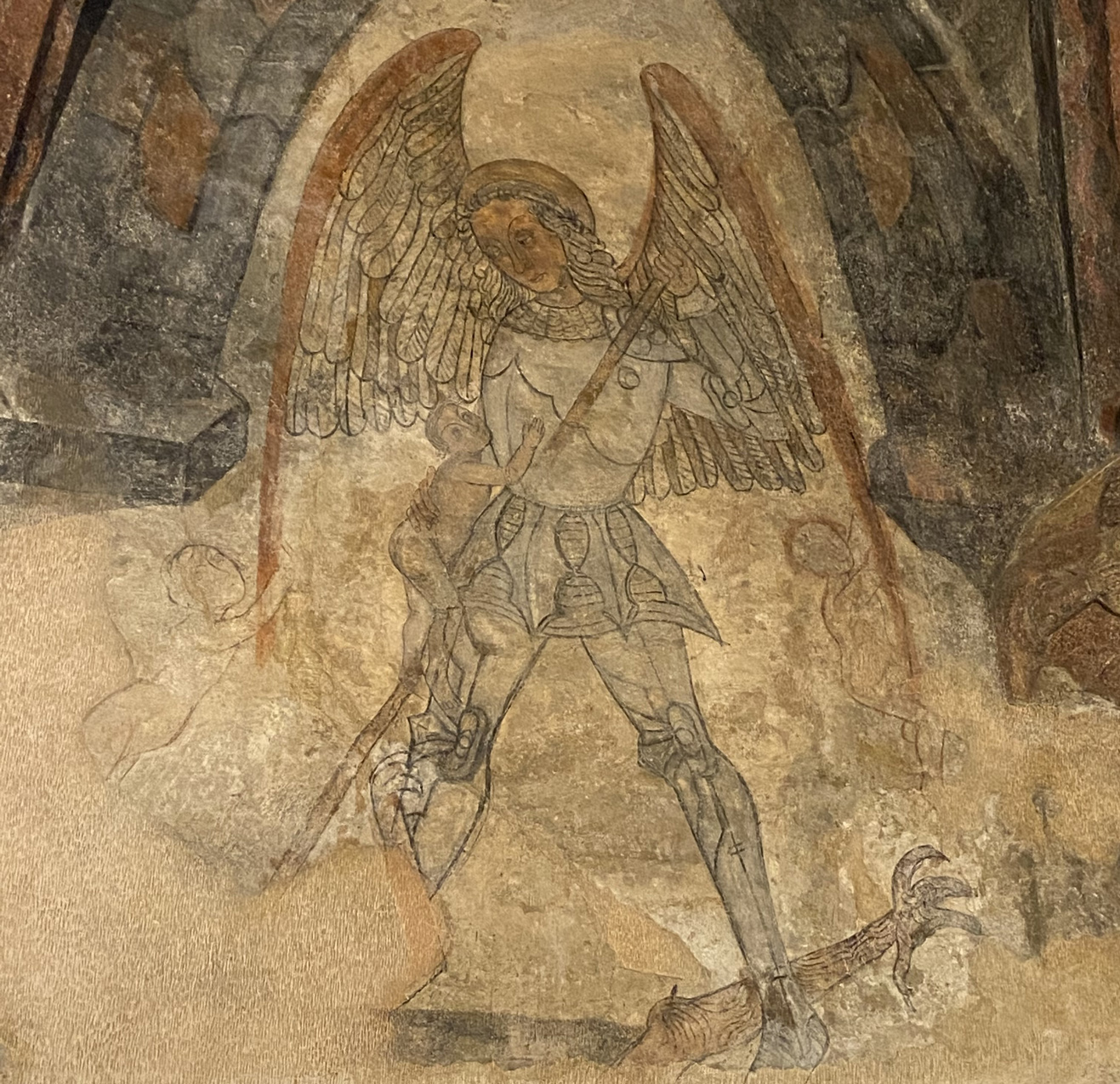
Among the church’s chapels, the one located on the left stands out: this rib-vaulted chapel is dedicated to Saint Michael (Saint Michel) and served as the burial chapel for the lords of Beaufort-Canilhac. The arch springs rest on two corbels depicting monks, and a 15th-century fresco, uncovered in 1969, depicts the archangel slaying the dragon. The keystone once bore the coat of arms of the seigniorial family of Beaufort-Canilhac.
Louis XVI’s Chalice
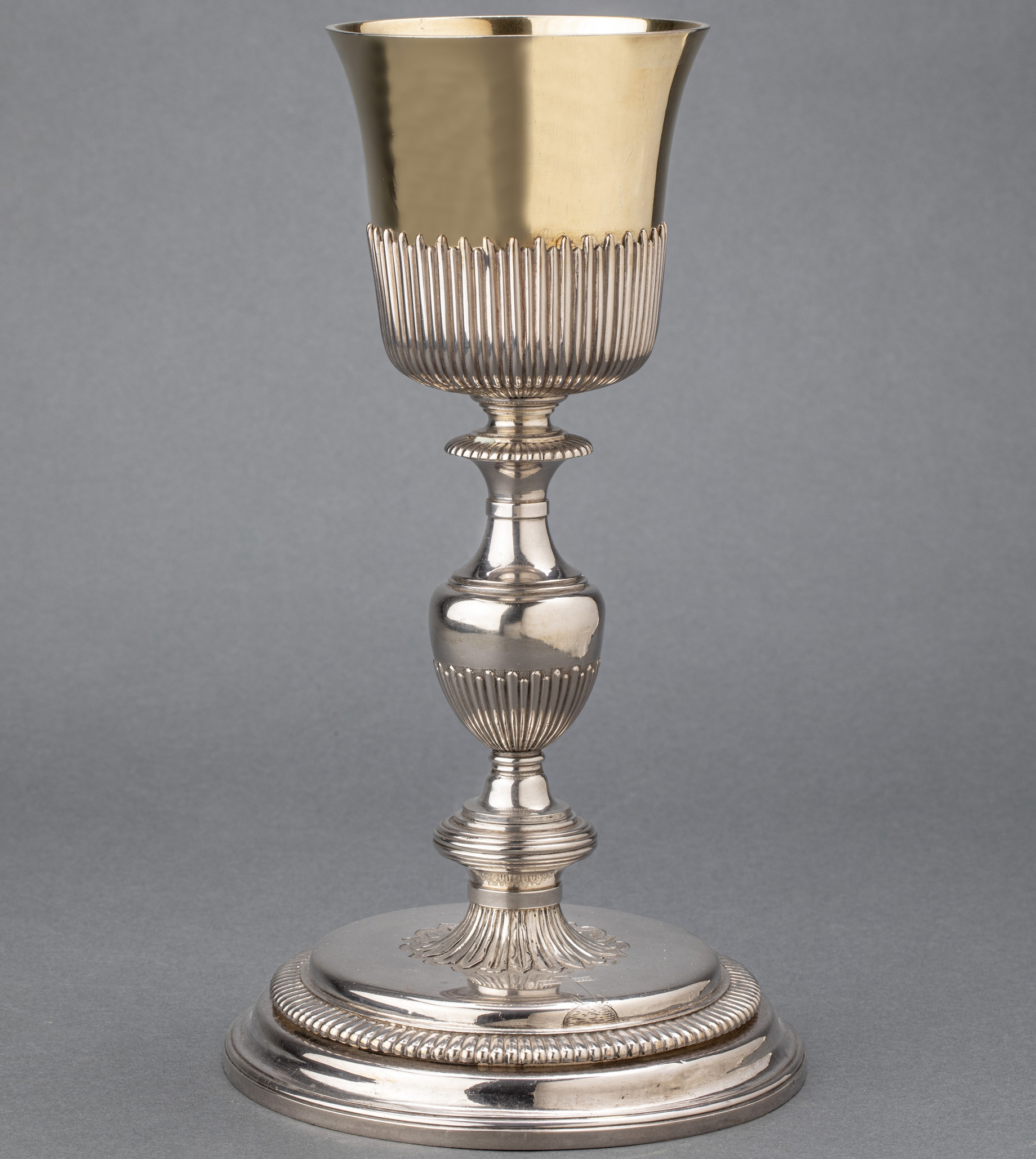
Classified as a national heritage (Monument Historique), the silver and vermeil chalice is, according to tradition, said to have been used during Louis XVI’s final Mass in 1793, before he was led to the guillotine. Used by his confessor, the Abbé de Firmont, it found its way to Saint-Urcize in the 19th century thanks to Father Ipcher, who had received it for his first Mass. With its silversmith’s hallmarks and engraved coat of arms, it links this peaceful mountain town to one of the most significant episodes in French history.
The Penitents’ Sacred Treasure
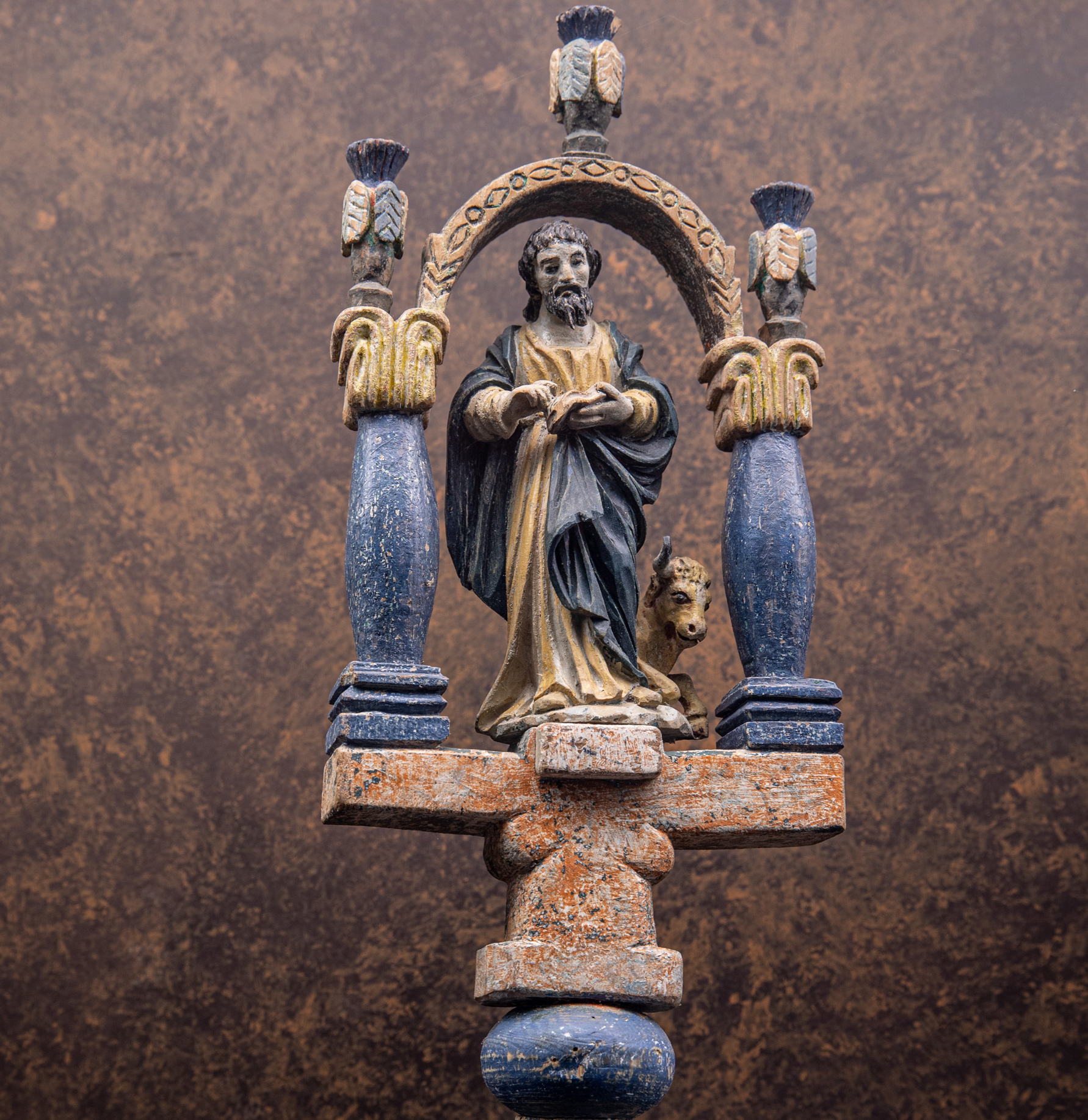
Saint-Urcize preserves a rare and exceptional heritage linked to its confraternity of white penitents: its sacred treasure. It comprises furnishings, twelve ornate staffs and the emblems of this confraternity. These rare objects are now on display in a room adjacent to the church. The staffs that have survived to the present day date mainly from the 18th and 19th centuries. The motifs on these staffs range from the four Evangelists to a monstrance featuring the Crown of Thorns, including symbols such as the Virgin and Child and the globe. The Penitents’ collection also includes a selection of emblems of the Passion (arma Christi in Latin), featuring physical elements from the various episodes of the Passion of Christ. These symbolic objects serve to illustrate the Holy Scriptures and were formerly used during processions.
Penitents’ Chapel
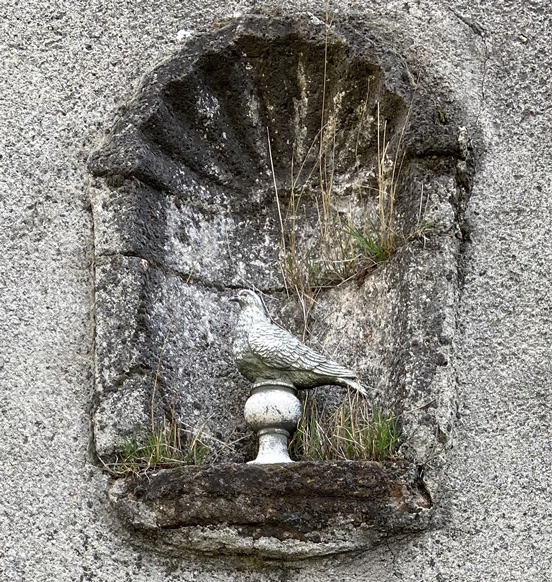
Founded in 1702 by Pope Clement XI, the Confraternity of the White Penitents of Saint-Urcize became a congregation in 1705 and exerted a great influence on Saint-Urcize and its surroundings. The Penitents were recruited from among laymen deemed to be impeccable. They held processions during the Feasts of the Cross and the Corpus Christi and carried out acts of charity (visiting the elderly and the poor, assisting the dying and praying for the dead). With around a hundred members, the congregation met in its chapel, built between 1717 and 1768 and dedicated to Saint John the Baptist. In 1792, it was dissolved by revolutionary law and revived under the Concordat in 1802, continuing its activities until 1914, when it was placed in dormant status. Finally, from the 1950s to 1964, Father Falcoim organised the last processions in penitential robes on Good Friday through the village streets.
Presbytery
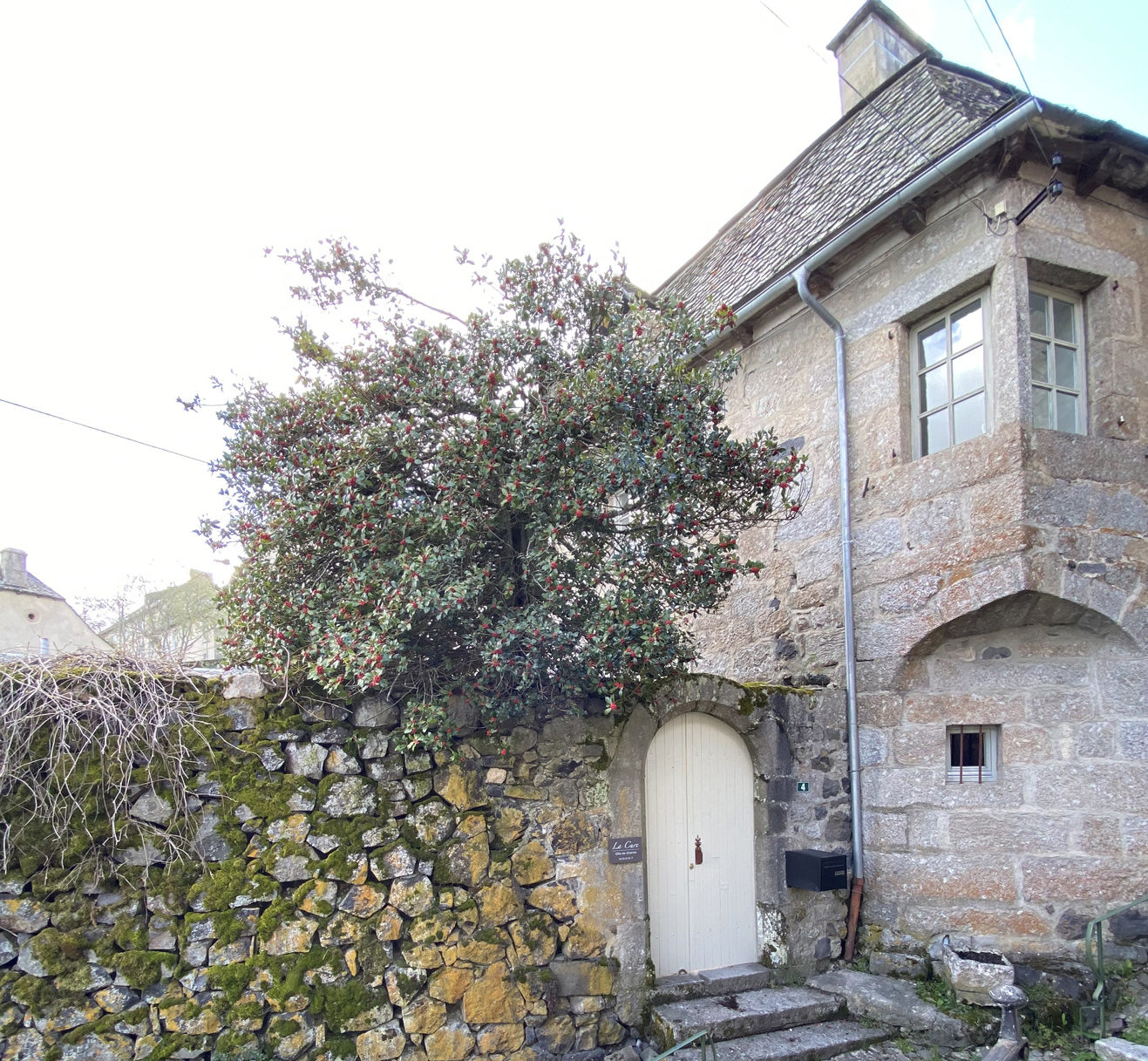
Just a few steps from the church, the presbytery reveals another facet of the sacred. Built in the 18th century, it belonged to the last lord of Saint-Urcize before being converted into accommodation for the parish priests. Sober and elegant, this house bears witness to the central role played by the clergy in everyday life: it was here that services were prepared, visitors and pilgrims were welcomed, and parish activities were organised. Now converted into a charming holiday cottage (gîte), the presbytery retains the atmosphere of a former dignitary’s residence.
Priory
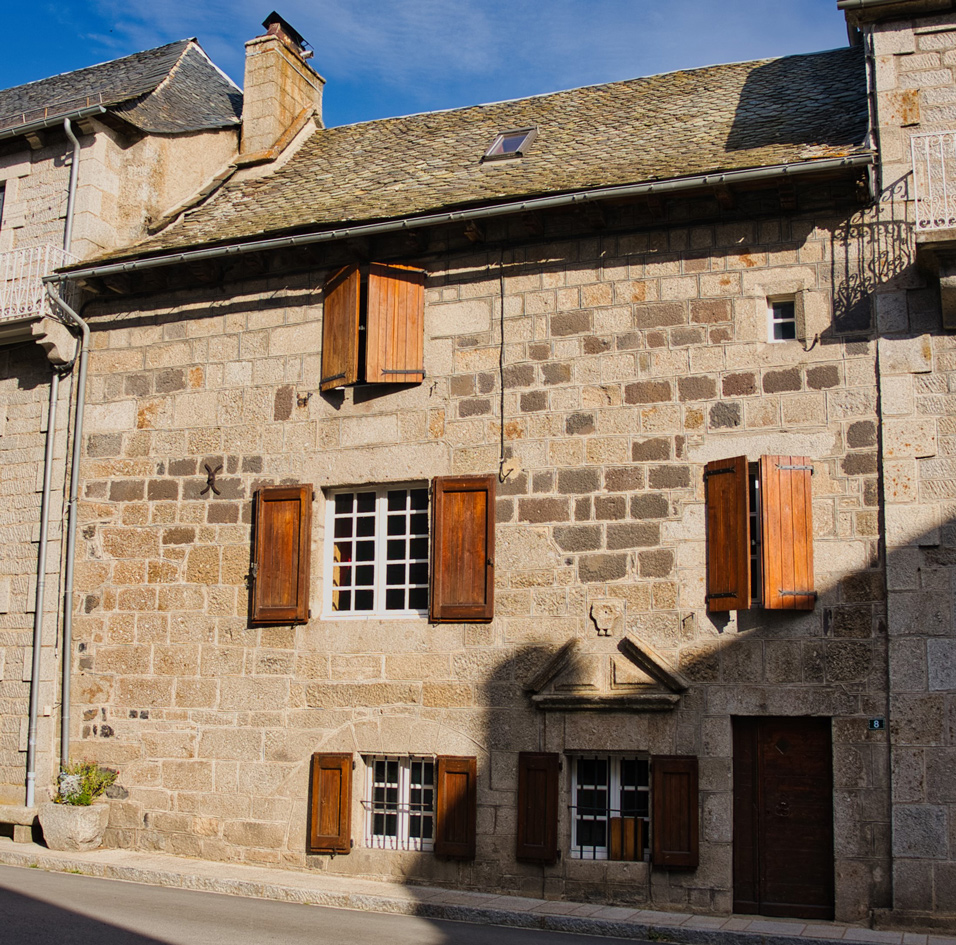
The Prior’s House, from which the prior exercised his authority over the parish until the French Revolution: taxation, justice and lordship. In 1662, Hugues Chamouroux, the last prior, had the present building constructed, a simple stone dwelling. The window, surmounted by the inscription ‘I.H.S.’ (‘Iesus Hominum Salvator’, meaning ‘Jesus, Saviour of Mankind’ in Latin) and a carved bishop’s mitre, was originally the entrance door, as the street level has since been raised.
Saint Roch’s Votive Chapel
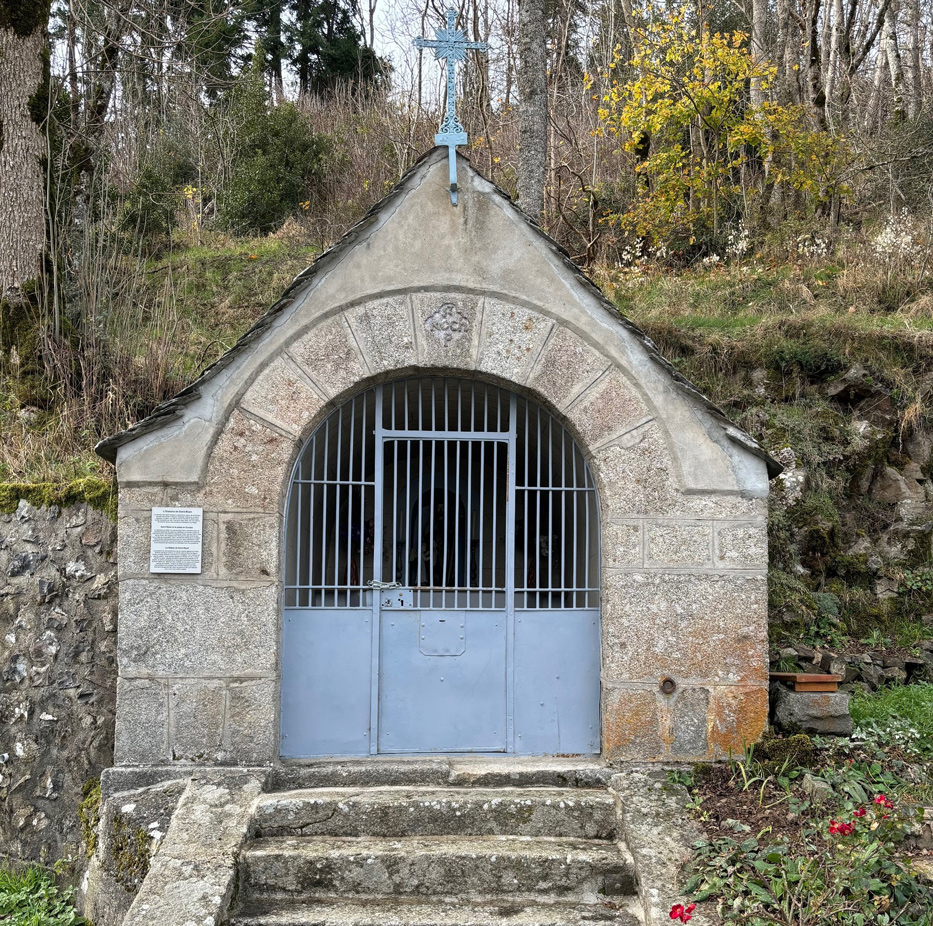
Overlooking the village, the Chapel of Saint-Roch is an important token of popular faith. Built in the 18th century, the chapel was dedicated to ensuring the protection of the inhabitants and their livestock against epidemics, the dreaded scourges of rural life. Inside stands a statue of Saint Roch, patron saint of plague victims and lepers. His role stems from his miraculous recovery after caring for the sick, which gave rise to his legend. Saint Roch is also commonly associated as a patron saint of livestock in Haute-Auvergne. In the parish church, the saint is depicted in majesty, clad in gold and crowned, but here he is portrayed in his pilgrim’s cloak, accompanied by his faithful dog. A more humble and protective image.
Virgin's Rock
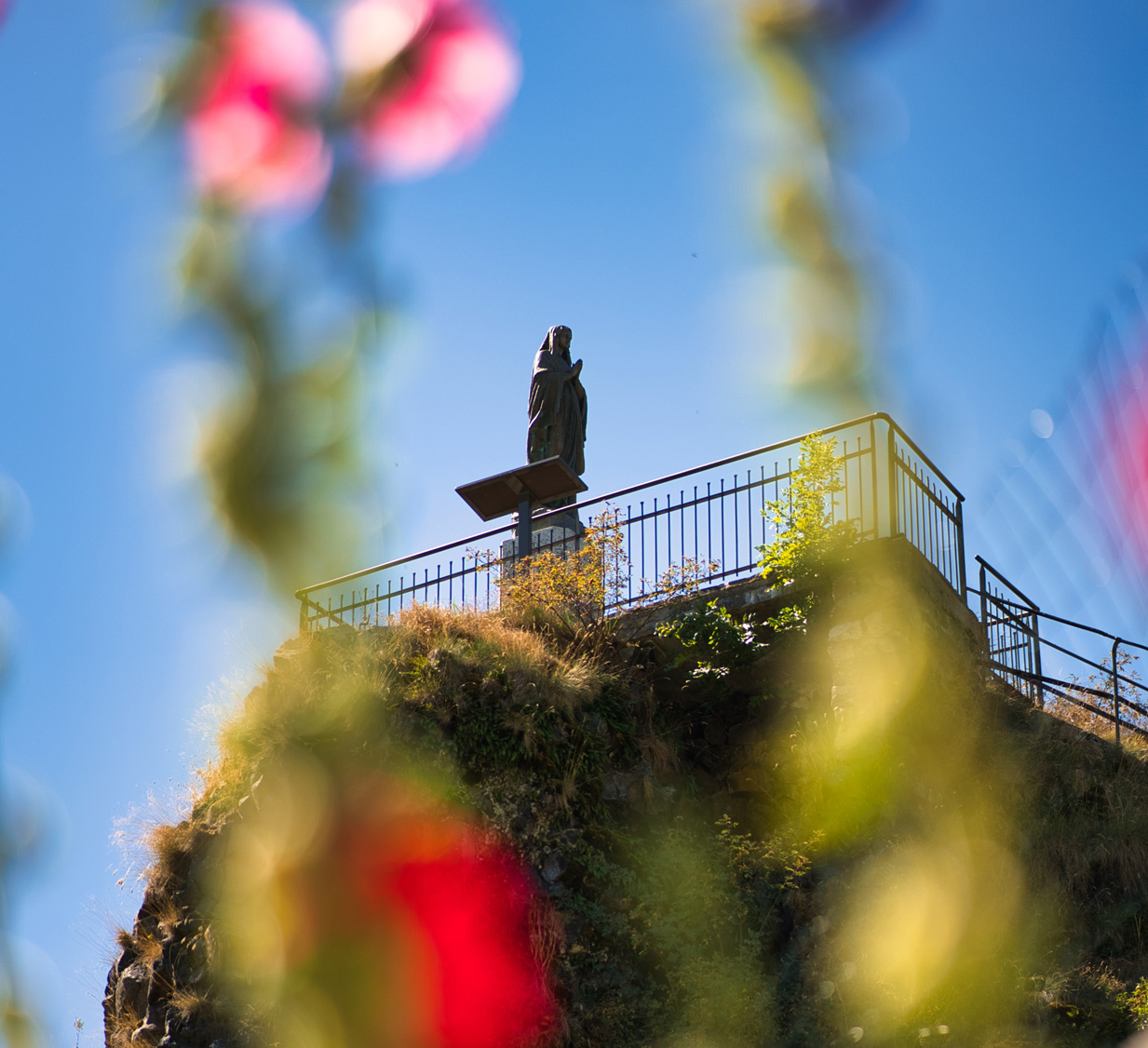
The statue of the Virgin Mary was erected in the 20th century to commemorate the protection afforded to the young inhabitants when enemy forces arrived in 1944. The rocks behind the statue are ancient lava flows which, through repeated freezing and thawing, have formed these scree (stone rubble) slopes known as ‘clapas’ in Occitan. With its unobstructed view of the Aubrac, its geological features and its sweeping landscapes, the Virgin's Rock (Rocher de la Vierge) is the perfect spot from which to understand the town within its surroundings.
Saint-Urcize in Aubrac
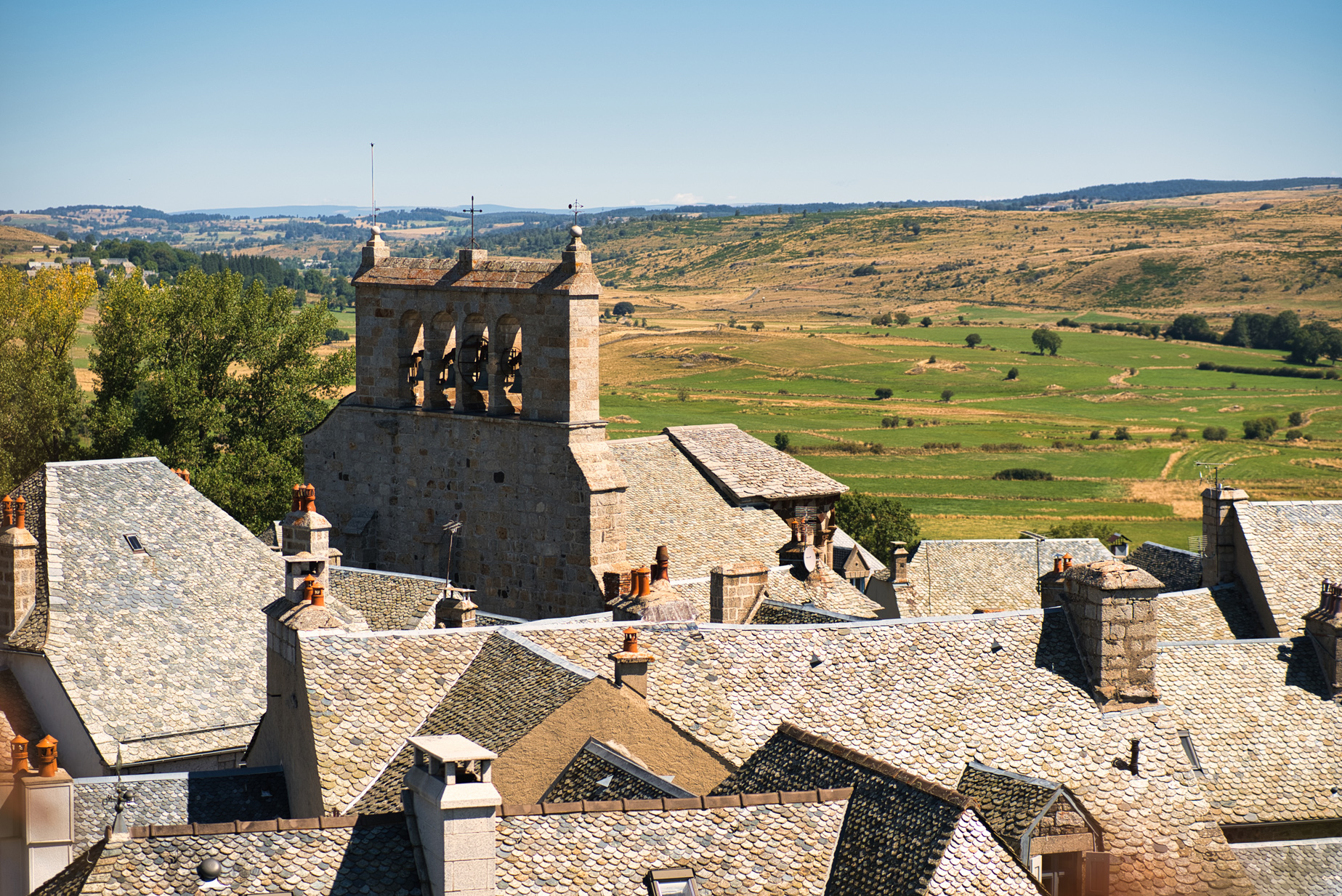
Saint-Urcize lies at the heart of the Aubrac, a mid-mountain range to the South of the Massif Central, flanked by the rivers Lot and Truyère, straddling three départements and designated a Regional Nature Park in 2018. The Aubrac is a volcanic massif formed 7 to 8 million years ago, with gentle peaks resulting from its fluid volcanic flows. The few notable peaks were subsequently eroded, such as the Puy de Gudet, the highest point in the commune (1,427 m). The Aubrac has also shaped the town through the omnipresence of water, as well as the agricultural traditions centred on livestock farming and iconic culinary specialities. You can appreciate the grandeur of this high volcanic plateau from the Virgin’s Rock promontory. From there, you can spot the Puy de Gudet and, at its foot, the Saint-Urcize forest, which is home to a small all-year-round (ski) resort called ‘Super Blaise’.
Moulinets Stairs
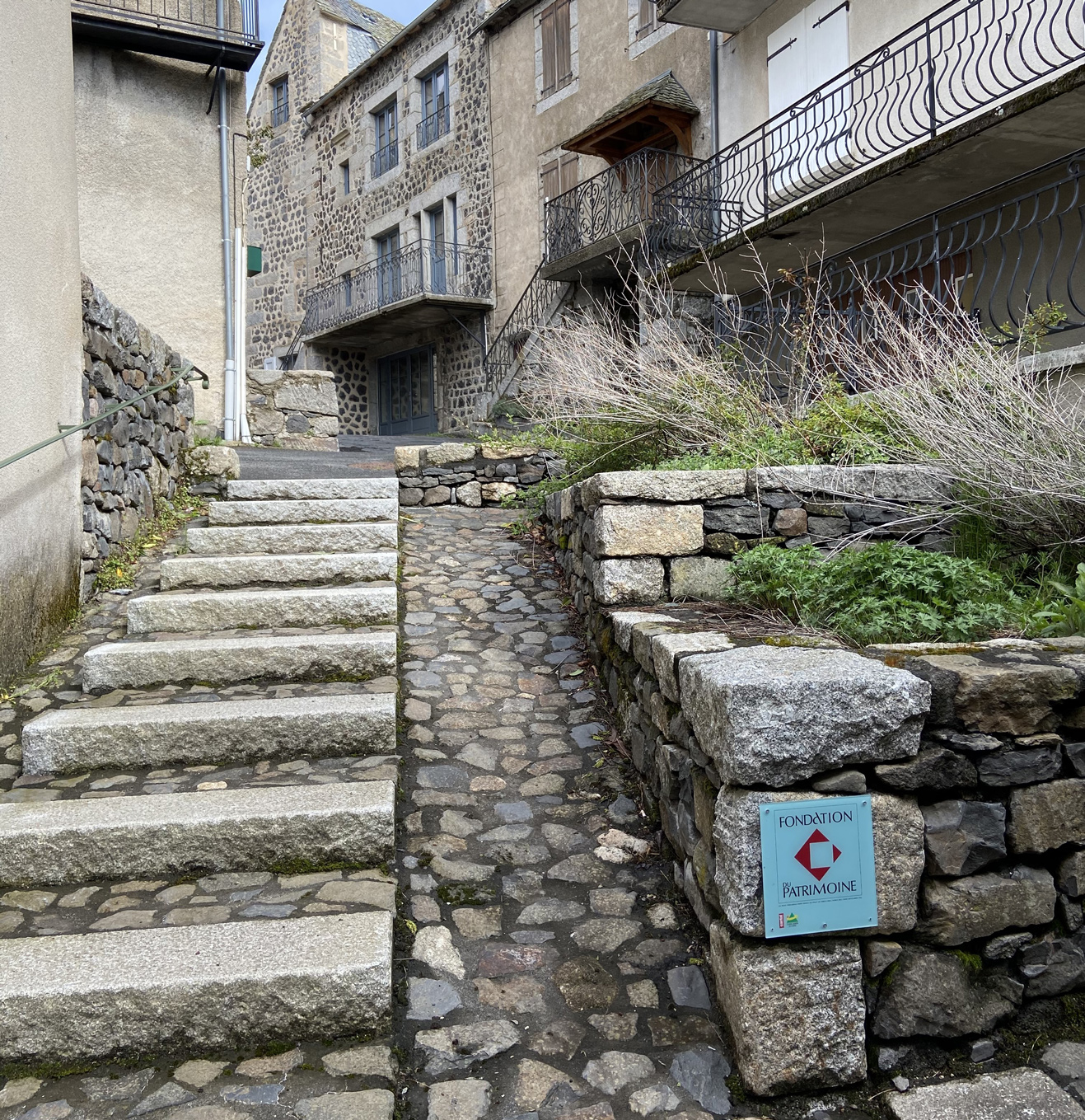
The Moulinets Stairs owe their name to the small watermills that once stood on the stream running alongside them. The water powered the machines used to card sheep’s wool, an essential activity in Saint-Urcize until the 18th century, providing numerous jobs. Saint-Urcize wool and its craftsmen were renowned for producing ‘cadis’ – small pieces of medium wool used to make belts for muleteers and sailors, shrouds or tapestry linings. The rearing of the Aubrac breed – with its fawn-coloured coat, ‘lined’ eyes and lyre-shaped horns, a source of local pride – was reserved for the wealthiest farmers and did not become widespread until the 18th century. Bred for meat production, it is a rustic breed, well-suited to the nutrient-poor pastures and forage of the Aubrac region. It spends much of the year on the summer pastures of the high plateau, helping to maintain the open landscapes.
Jiou-Jiou and Gouteilles waterfalls
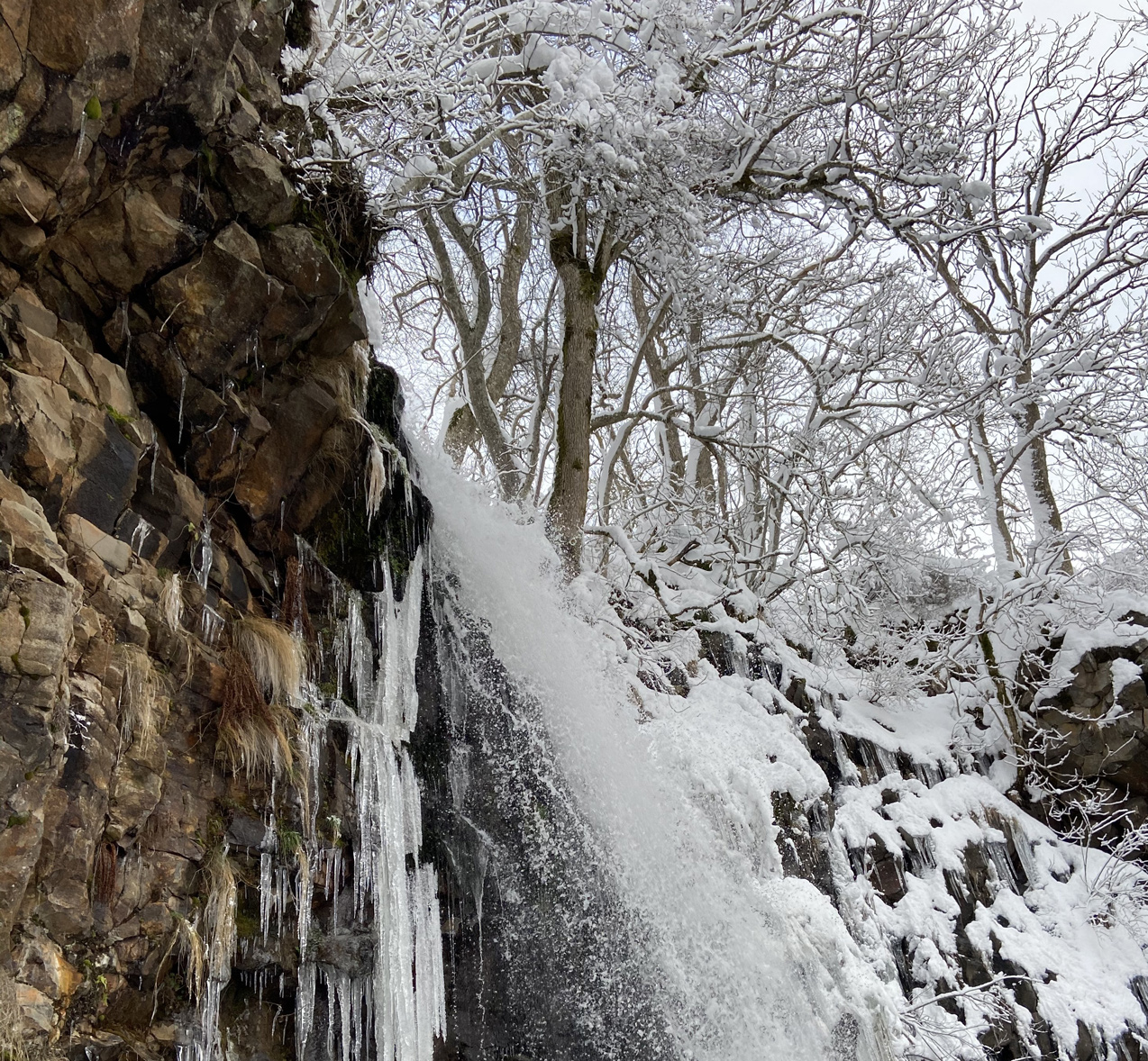
South of the town, two spectacular waterfalls follow one another: Jiou-Jiou and Gouteilles, 10 and 20 meters high, respectively. Flowing from small streams that merge to form the River Hère , they showcase the power of water in a landscape sculpted by glaciers within volcanic slopes.
Bauron and Vauron Bridges
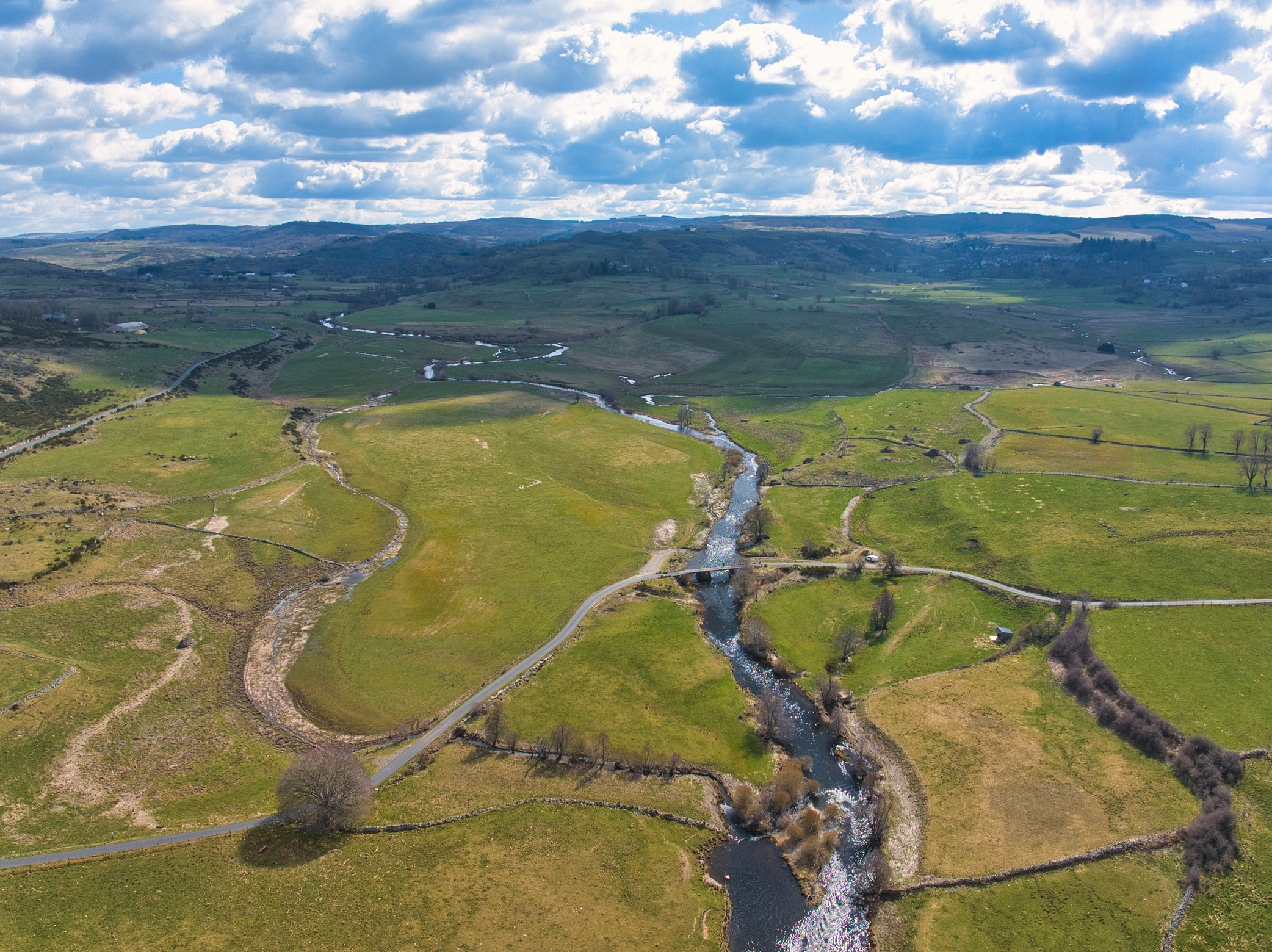
The rivers that flow through Saint-Urcize are dotted with bridges connecting the two banks. Among them, the simple, sturdy and elegant Bauron and Vauron bridges are a reminder of the craftsmanship of the builders who, for centuries, have made ingenious use of stone to cross waterways.
Burons of the Aubrac plateau
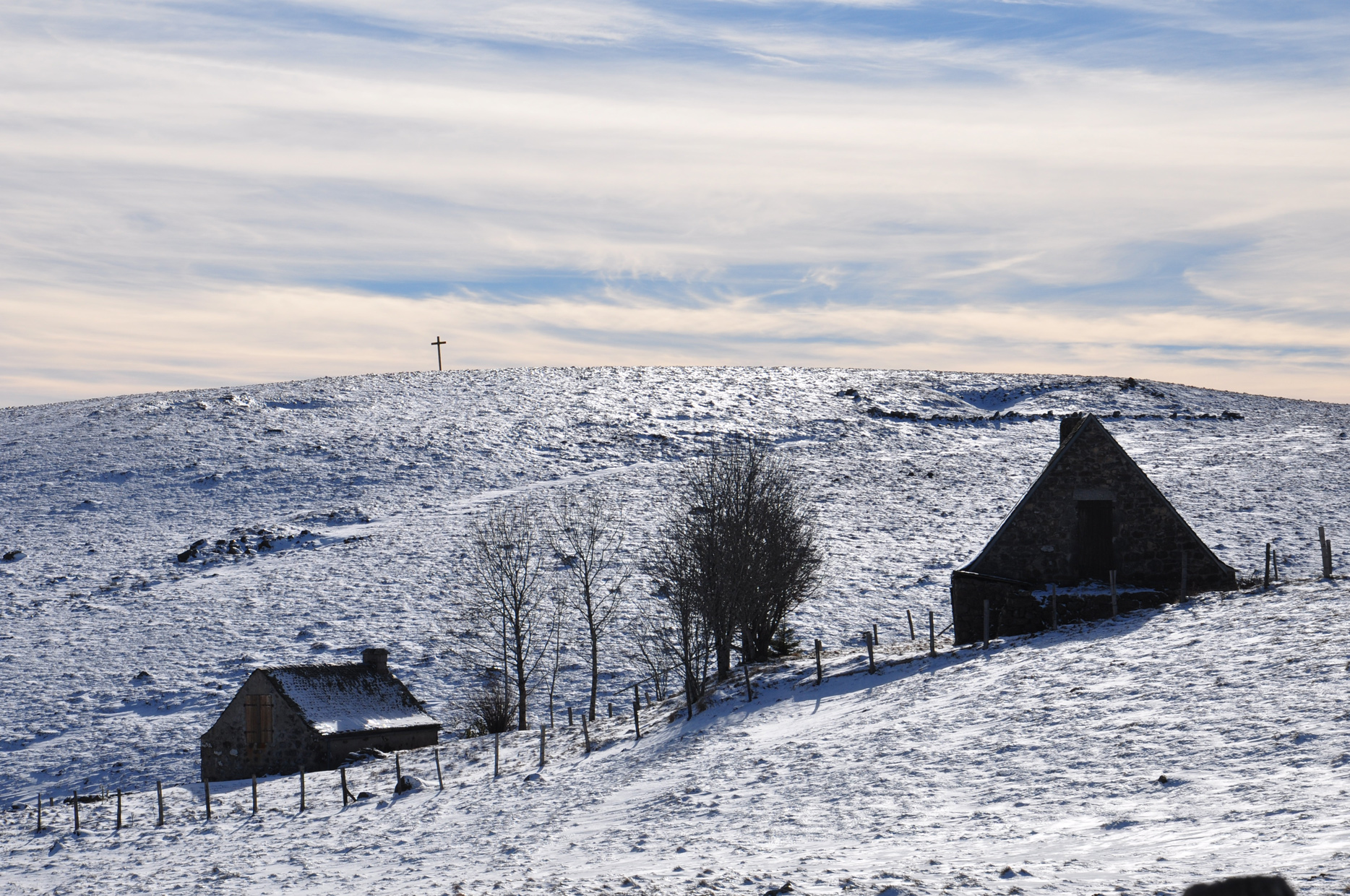
The buron, emblematic of the Saint-Urcize area, is a seasonal dwelling built on the ‘milking hills’ for the buronniers, who produce the cheese. The ancestors of the burons, known as ‘tra(p)s’, date back to Antiquity, when milk was curdled using plants. These holes, covered with branches to preserve the cheese, came to be known as burons in the 5th century under the Germanic influence of the word ‘Buch’ (beech). The origins of today’s burons lie in the 13th century: the ‘cabanas’ were used to shelter livestock and to make sheep’s cheese. The Aubrac region once had as many as 300 burons, and Saint-Urcize is one of the 27 communes on the plateau that still retain some. A buron consists of basalt or granite walls 60 to 80 cm thick, and a roof of schist slabs (lauzes) or slate slabs (dating from after the French Revolution). Some burons are now open to the public for dining or overnight stays.
Saint-Urcize’s Fountains
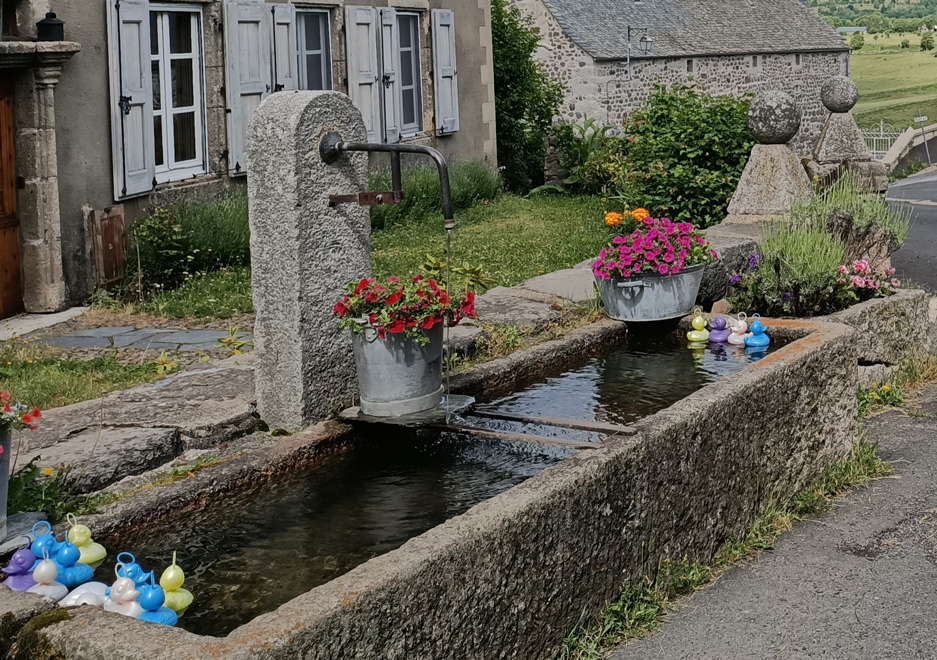
Water has always played a central role in Saint-Urcize, through the many fountains that symbolise the town’s identity and the streams that power several mills, driving local economic development. The squares of Saint-Urcize come to life around granite fountains – round or rectangular – fed by clear springs. Place de la Frique or Place del Fritch, Place du Ters, Place Sœur Saint-Jean de la Croix, the Grégoire fountain or even at the foot of the Poustel – each has its own history and charm. For centuries, they were gathering places where people came to draw water for their homes, wash their clothes or exchange news.
Aligot, a Culinary Specialty from Aubrac
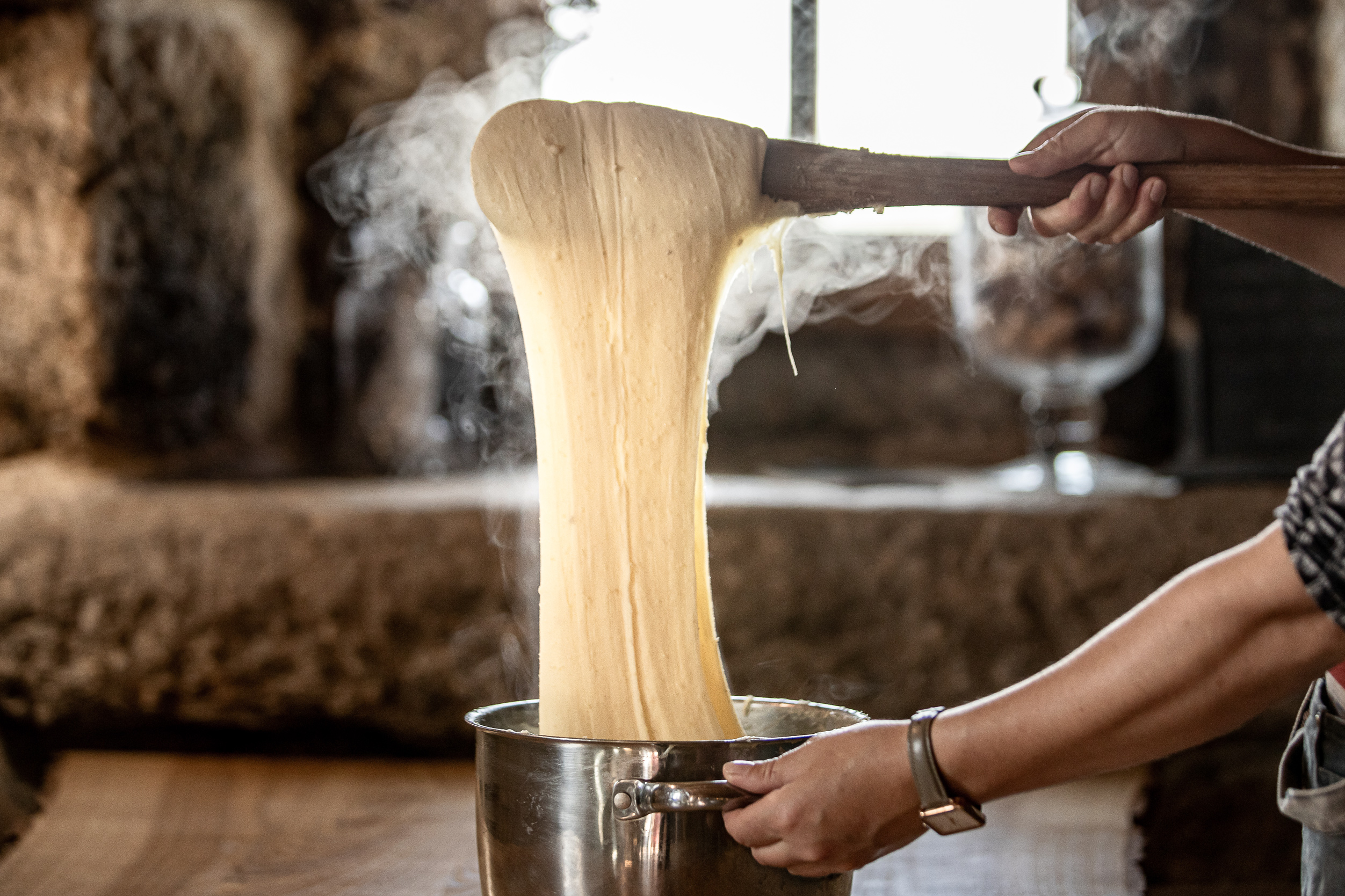
Originally, aligot was a mixture of bread and fresh tome (toma) cheese, which the monks in Aubrac served to pilgrims asking for ‘something’ to eat (aliquid in Latin, which became aligot). After the French Revolution, the buronniers employed by wealthy landowners were not allowed to eat matured cheese, but they would secretly take some fresh tome to make aligot. In the 18th century, a poor wheat harvest forced them to replace the bread with mashed potatoes, giving rise to the aligot as we know it today. A key element of the pastoral economy, aligot then became the staple dish of the Aubrac region. Since 2023, this local expertise has been recognised by a Protected Geographical Indication (PGI), ‘Tome fraîche de l’Aubrac’, which certifies that the cheese is made using raw whole milk produced in accordance with strict specifications that promote sustainable agriculture in the Aubrac region.
Fougasse, a Sweet from Saint-Urcize
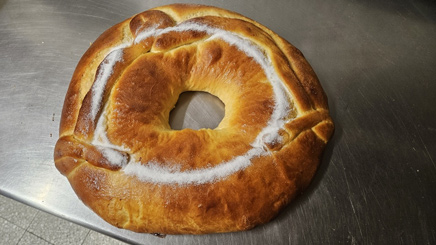
The Saint-Urcize fougasse is a delicious brioche flavoured with orange flower water, made using traditional methods that have been passed down from generation to generation since 1858.

Ce projet de carte interactive est porté par les associations Petites Cités de Caractère® de France, Petites Cités de Caractère® en Auvergne Rhône Alpes et par la commune de Pleaux
Il est soutenu financièrement par la convention FNADT du Commissariat Massif Central, et par l'appel à projet "patrimoine et numérique" de la Région Auvergne Rhône-Alpes, et par la Fondation d'Entreprises du Crédit Agricole Centre France.
Le plan de la commune (visuel de fond) a été réalisé par Laura Catheline - atelier passage.
Les traductions en anglais ont été réalisées par l'Office de tourisme de la Châtaigneraie cantalienne.
Les voix ont été produites et enregistrées par Hélène Poussin - Compagnie « les pieds bleus » (version française), et Nico Productions (version anglaise).
Les photos ont été produites et réalisées par Frédéric Angot, Patrick Forget, OT Pays de Salers, CAUE Cantal, Mairie de Pleaux, Petites Cités de Caractère®, Antom Production - Antony Moujol, CC&CC, Editions Roux.
La vidéo a été produite et réalisée par Petites Cités de Caractère®.
Conception et développement de la carte interactive par Tabula Rasa.

Ce projet de carte interactive est porté par les associations Petites Cités de Caractère® de France, Petites Cités de Caractère® en Auvergne Rhône Alpes et par la commune de Pleaux
Il est soutenu financièrement par la convention FNADT du Commissariat Massif Central, et par l'appel à projet "patrimoine et numérique" de la Région Auvergne Rhône-Alpes, et par la Fondation d'Entreprises du Crédit Agricole Centre France.
Le plan de la commune (visuel de fond) a été réalisé par Laura Catheline - atelier passage.
Les traductions en anglais ont été réalisées par l'Office de tourisme de la Châtaigneraie cantalienne.
Les voix ont été produites et enregistrées par Hélène Poussin - Compagnie « les pieds bleus » (version française), et Nico Productions (version anglaise).
Les photos ont été produites et réalisées par Frédéric Angot, Patrick Forget, OT Pays de Salers, CAUE Cantal, Mairie de Pleaux, Petites Cités de Caractère®, Antom Production - Antony Moujol, CC&CC, Editions Roux.
La vidéo a été produite et réalisée par Petites Cités de Caractère®.
Conception et développement de la carte interactive par Tabula Rasa.